SeniorFit

Sciatica Exercises for Seniors (Free Printable Chart)

These gentle movements are often included in routines for people living with sciatica. This free printable chart lists seven low-load moves — a knee-to-chest, figure-four stretch, cat-cow, pelvic tilt, hamstring stretch, seated twist, and a standing extension — each with large step-by-step text. Move slowly, stop if something sharpens, and breathe steadily throughout.

Position
Seated and standing
Equipment
A sturdy chair (and a mat)
Exercises
7

The exercises

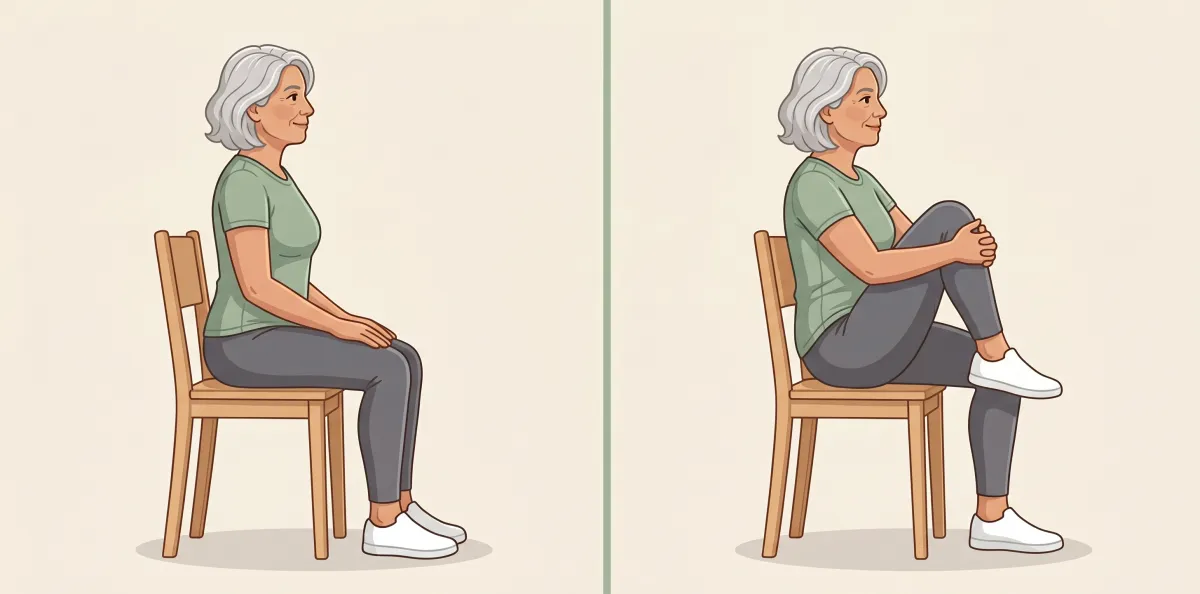
Seated Knee-to-Chest: the starting position on the left and the finishing position on the right

Seated Knee-to-Chest

  1. Sit tall toward the front of the chair, feet flat on the floor.
  2. Hold behind one knee and gently draw it up toward your chest.
  3. Hold, lower the foot, and switch legs.

Aim for: Hold 20 seconds each leg · 2 times

Gently releases the low back and glute.

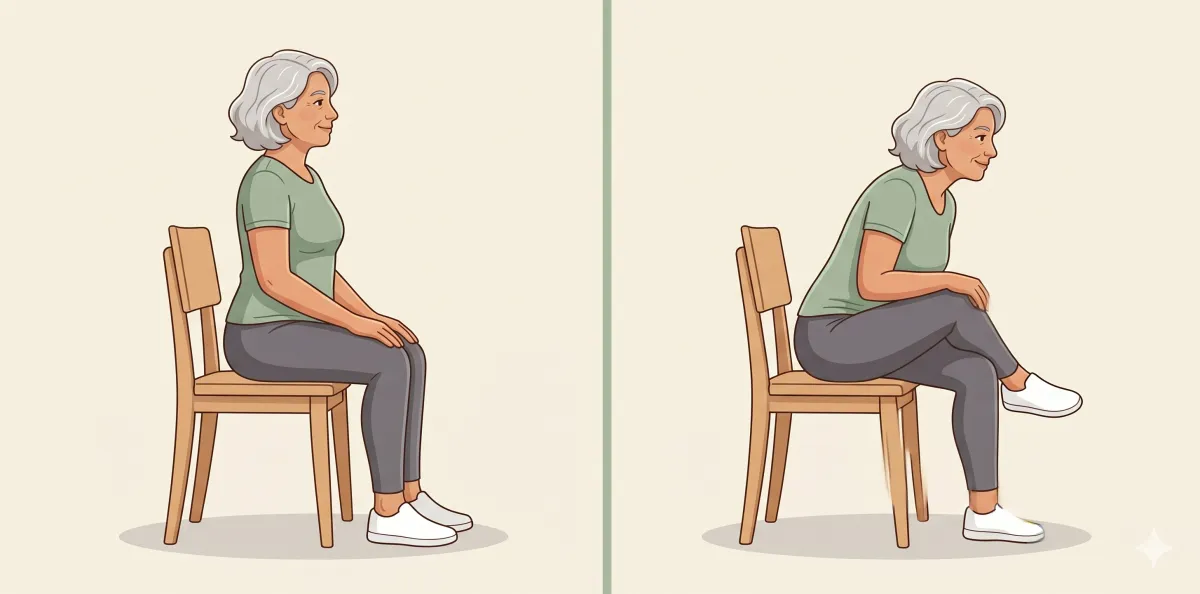
Seated Figure-Four Stretch: the starting position on the left and the finishing position on the right

Seated Figure-Four Stretch

  1. Sit tall and cross your right ankle over your left knee.
  2. Breathe out and lean gently forward from the hips.
  3. Hold, then switch legs.

Aim for: Hold 20 seconds each side · 2 times

Stretches the outer hip and glute.

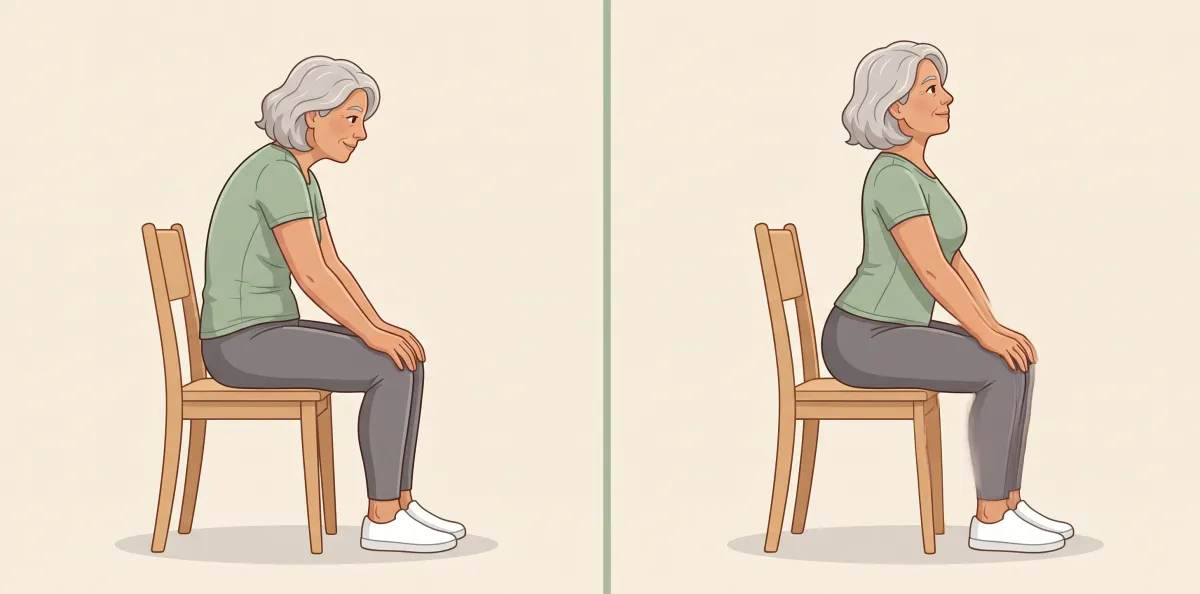
Seated Cat-Cow: the starting position on the left and the finishing position on the right

Seated Cat-Cow

  1. Sit tall with hands on your knees.
  2. Breathe in and arch gently, lifting the chest (cow).
  3. Breathe out and round the back, tucking the chin (cat).

Aim for: 6 slow rounds

Loosens the spine and eases back stiffness.

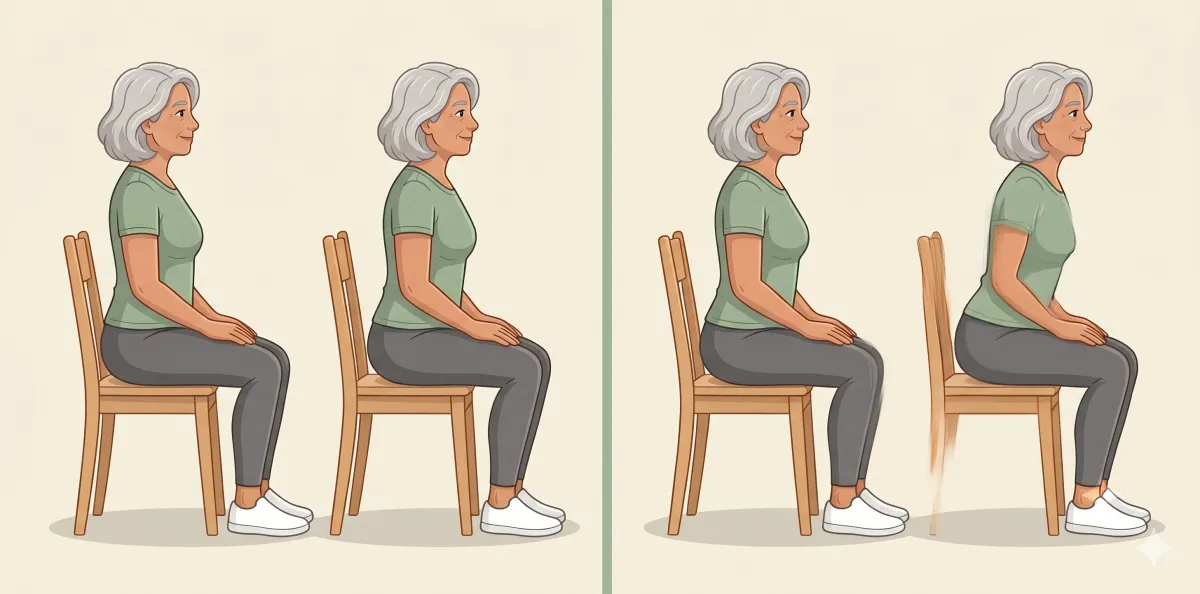
Seated Pelvic Tilt: the starting position on the left and the finishing position on the right

Seated Pelvic Tilt

  1. Sit tall with both feet flat on the floor.
  2. Gently rock the pelvis forward to arch the low back slightly.
  3. Then rock it back to flatten the low back. Move slowly and smoothly.

Aim for: 10 slow rocks · 2 sets

Keeps the low back mobile and eases stiffness.

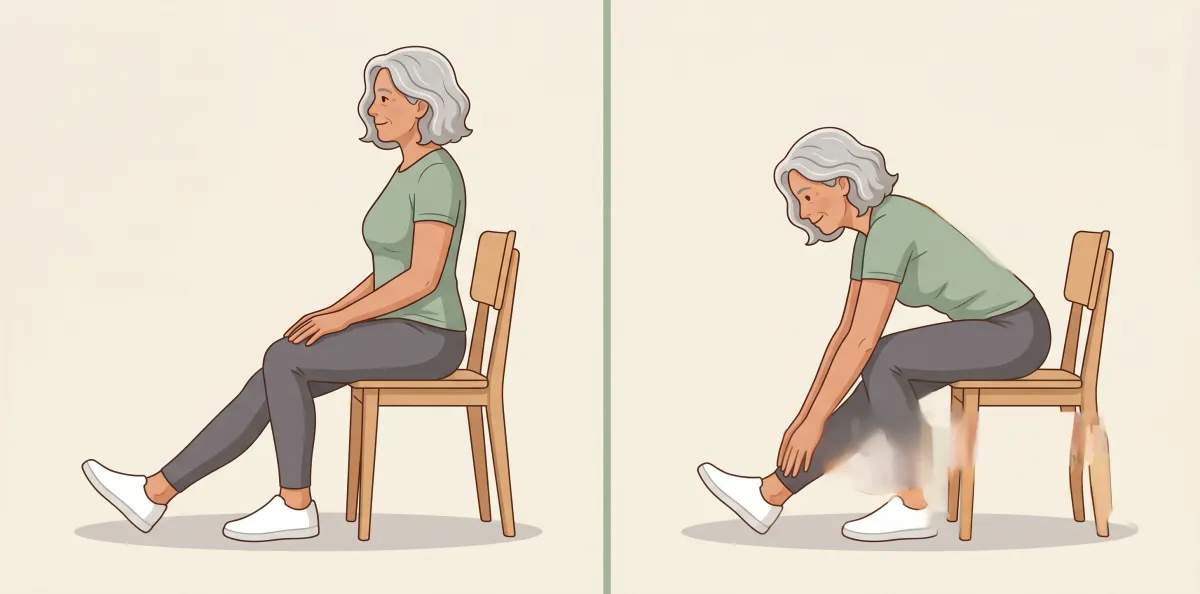
Seated Hamstring Stretch: the starting position on the left and the finishing position on the right

Seated Hamstring Stretch

  1. Sit tall and straighten one leg out, heel on the floor, toes up.
  2. Hinge forward gently from the hips until you feel a mild stretch.
  3. Hold, then switch legs.

Aim for: Hold 20 seconds each leg · 2 times

Keeps the backs of the legs loose for walking.

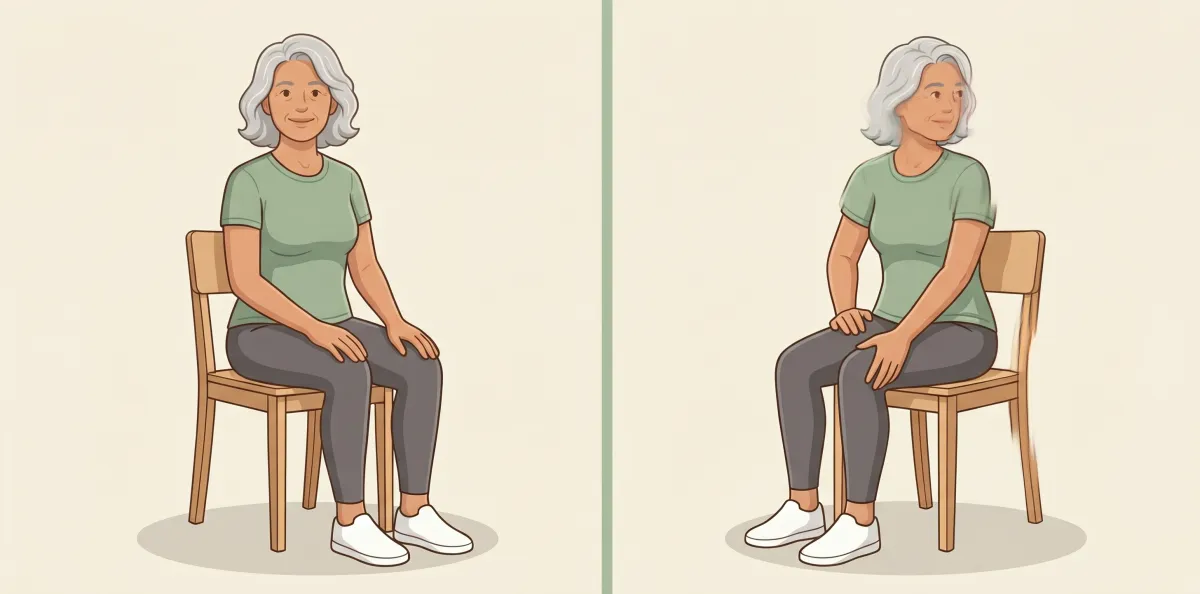
Seated Gentle Twist: the starting position on the left and the finishing position on the right

Seated Gentle Twist

  1. Sit tall with feet flat on the floor.
  2. Turn gently to one side, resting a hand on the chair back.
  3. Return to center and turn to the other side.

Aim for: Hold 15 seconds each side · 1 time

Keeps the spine mobile for turning and reaching.

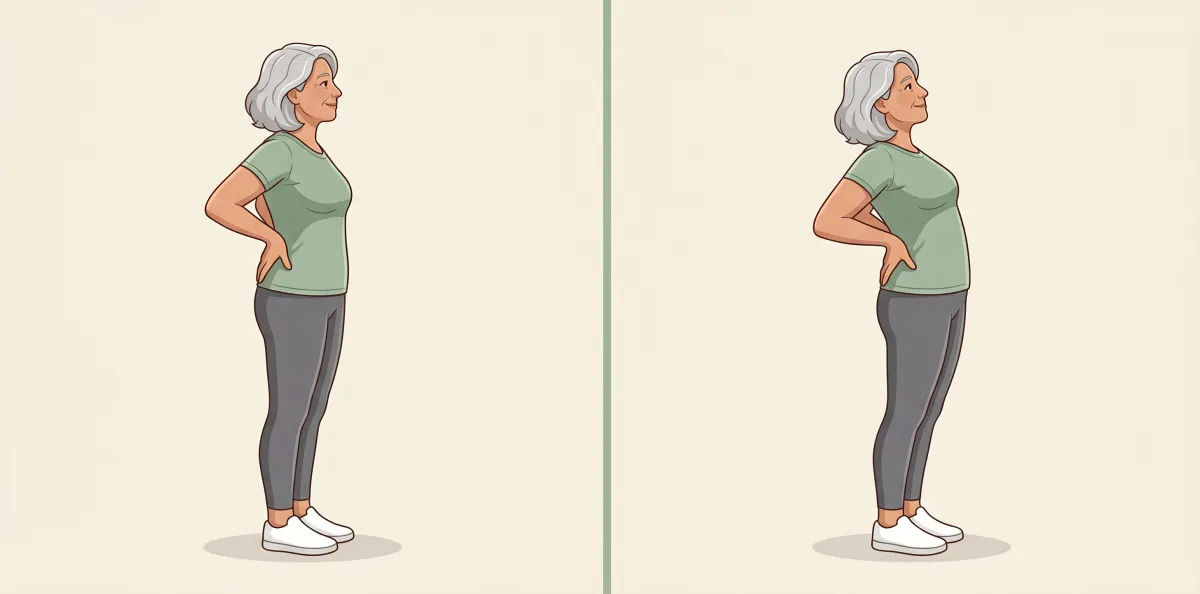
Standing Back Extension: the starting position on the left and the finishing position on the right

Standing Back Extension

  1. Stand tall behind the chair, holding the back for support.
  2. Place both hands on your low back and gently arch backward a few inches.
  3. Return to upright and repeat.

Aim for: 6–8 reps · 1 set

Eases a forward-bent posture and keeps the spine mobile.

Print this chart

A one-file PDF with all 7 exercises, large step-by-step text, set and rep counts, and a simple figure for each move. Prints clearly in black and white — tape it to the fridge and follow it each day.

Free · No signup · US Letter · 7 exercises

Check with your doctor before starting a new exercise routine, especially if you have a health condition or have not been active for a while. Move slowly and stop any exercise that causes pain.

Tips

  • Move slowly through each exercise and stop if anything sharpens.
  • Use a chair without wheels placed on a non-slip surface.
  • A thin mat under the chair adds comfort if the floor is hard.
  • Print on plain white paper for a clear black-and-white chart.

Common questions

Are these exercises safe to do on my own?
These are gentle, low-load movements that many people do at home. If you have any concerns about your specific situation, check with your doctor or physical therapist before starting a new exercise routine.
How often should I do this routine?
Once or twice a day is a common starting point for people working through gentle mobility routines. A short session in the morning and a second one in the evening often fits easily into a daily schedule.
Should I stop if I feel any sensation in my leg?
Stop the specific movement and rest. A mild, dull stretch is normal but sharp, shooting, or worsening sensations are a signal to stop, rest, and speak with your doctor before continuing.