SeniorFit

Dumbbell Exercises for Seniors (Free Printable Chart)

Light dumbbells add gentle resistance that helps older adults build the muscle strength needed for lifting, carrying, and staying independent. This free printable chart lists seven moves — bicep curl, overhead press, lateral and front raises, seated row, triceps extension, and sit-to-stand — each with large step-by-step text and a rep count. Start light and move slowly with every repetition.

Position
Seated and standing
Equipment
Light dumbbells and a sturdy chair
Exercises
7

The exercises

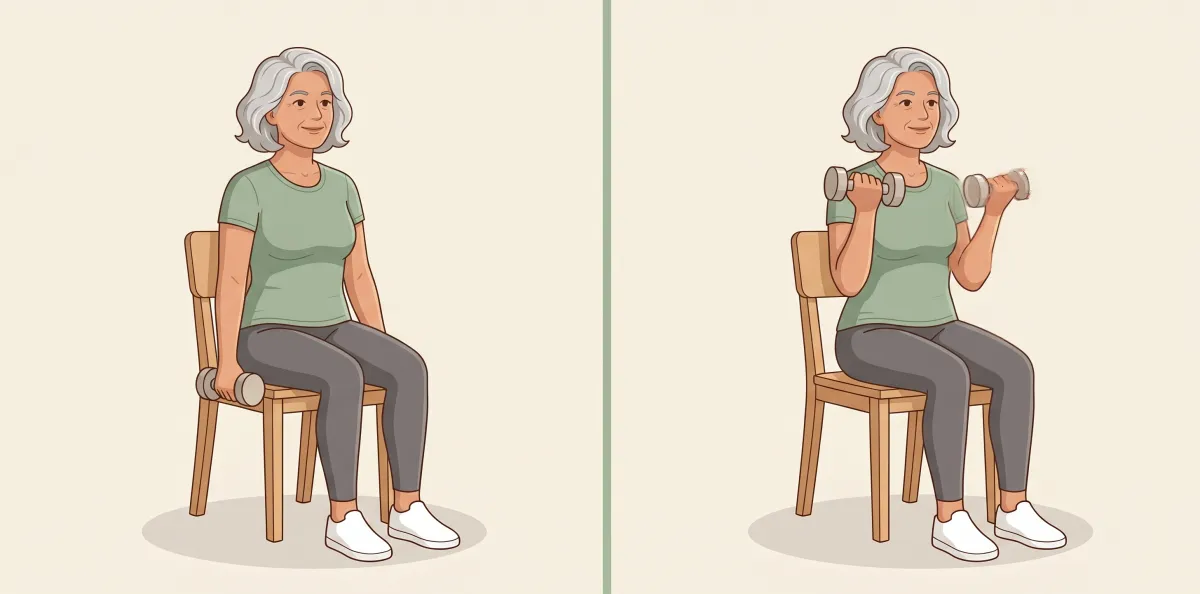
Dumbbell Bicep Curl: the starting position on the left and the finishing position on the right

Dumbbell Bicep Curl

  1. Sit tall or stand, a light dumbbell in each hand, palms facing forward.
  2. Curl both dumbbells up toward the shoulders, keeping elbows at your sides.
  3. Lower them slowly with control.

Aim for: 10 reps · 2 sets

Strengthens the arms for everyday lifting and carrying.
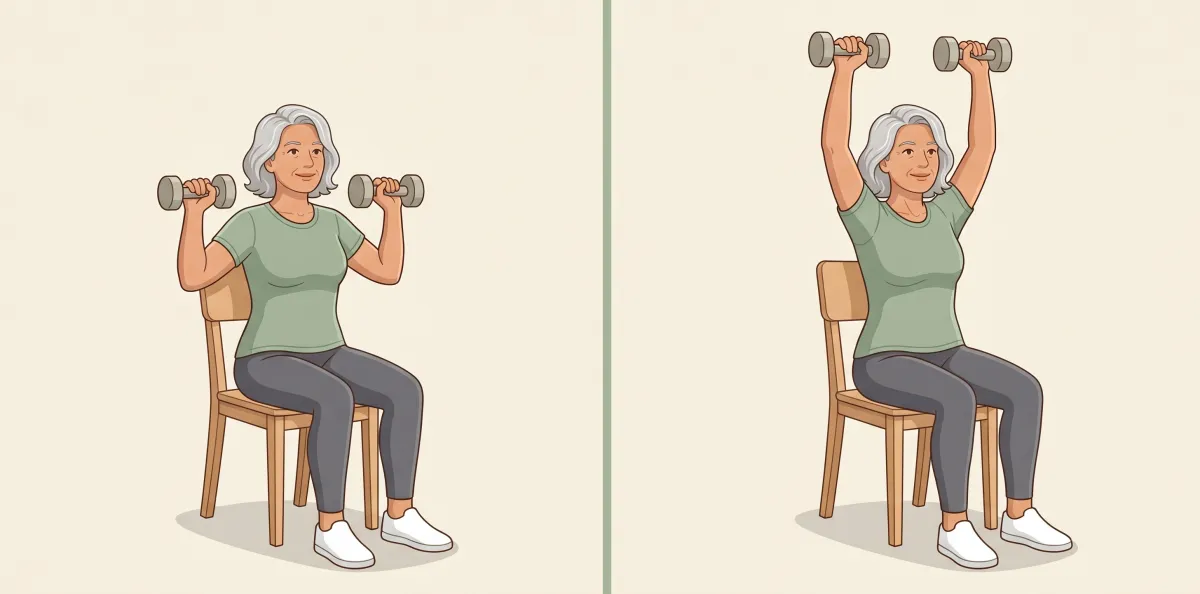
Dumbbell Overhead Press: the starting position on the left and the finishing position on the right

Dumbbell Overhead Press

  1. Sit tall or stand behind the chair, a light dumbbell in each hand at shoulder height.
  2. Press both dumbbells straight overhead until the arms are nearly straight.
  3. Lower them slowly back to shoulder height.

Aim for: 8–10 reps · 2 sets

Builds shoulder and arm strength for lifting overhead.

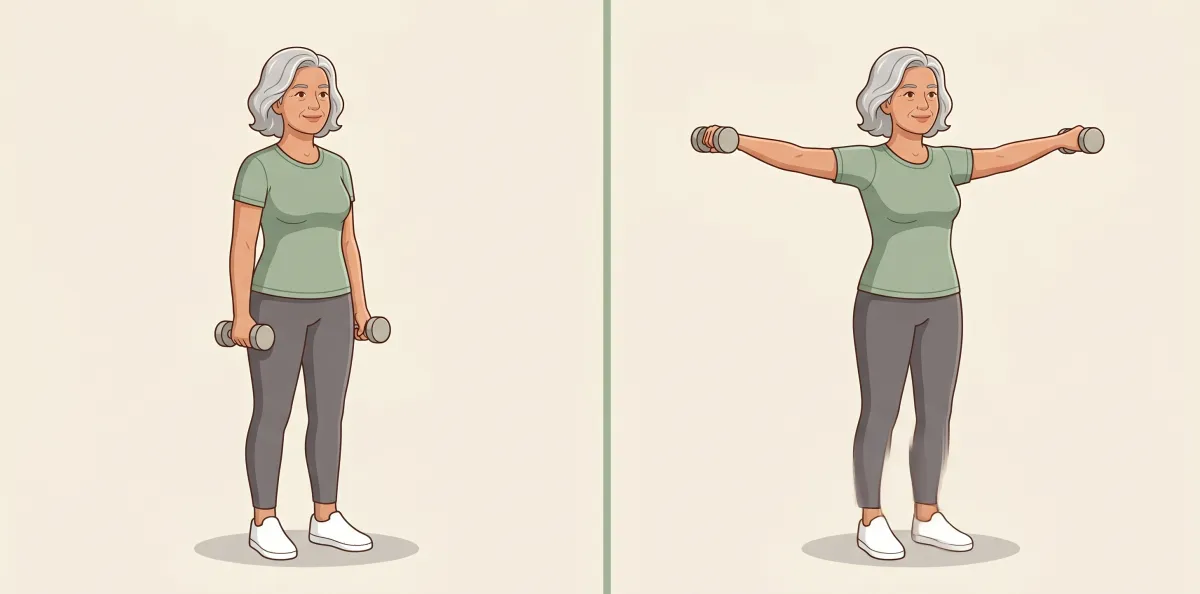
Dumbbell Lateral Raise: the starting position on the left and the finishing position on the right

Dumbbell Lateral Raise

  1. Stand or sit tall, a dumbbell in each hand at your sides.
  2. Raise both arms out to the sides until they reach shoulder height.
  3. Lower them slowly with control.

Aim for: 8–10 reps · 2 sets

Strengthens the outer shoulders for reaching and carrying.

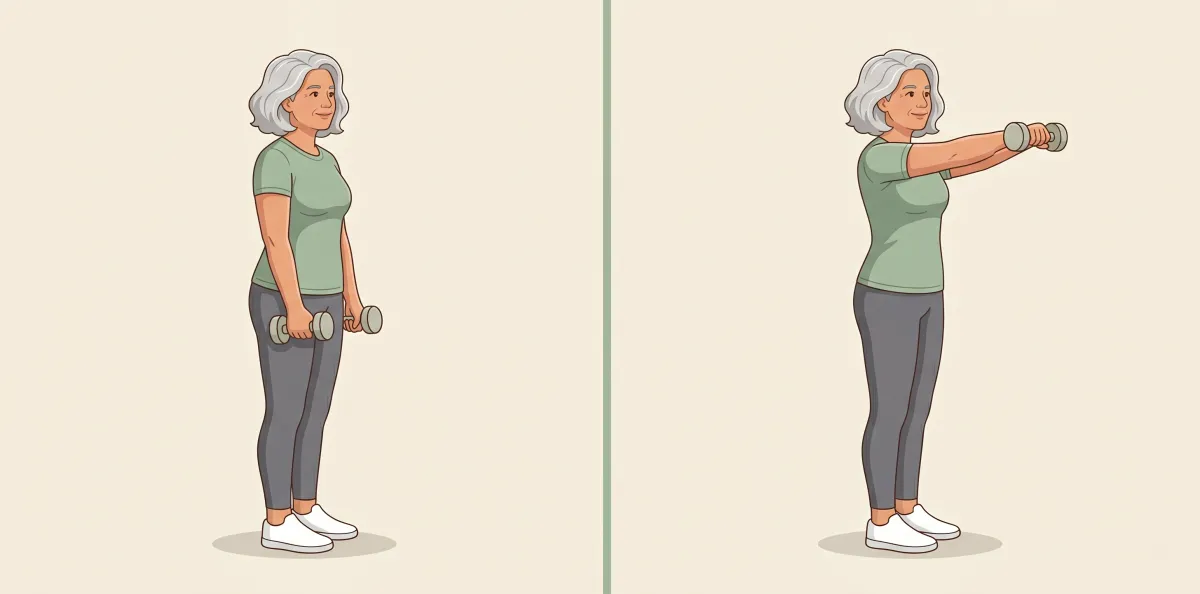
Dumbbell Front Raise: the starting position on the left and the finishing position on the right

Dumbbell Front Raise

  1. Stand or sit tall, a dumbbell in each hand at your sides.
  2. Raise both arms straight forward to shoulder height.
  3. Lower them slowly with control.

Aim for: 8–10 reps · 2 sets

Strengthens the front of the shoulders for reaching forward.

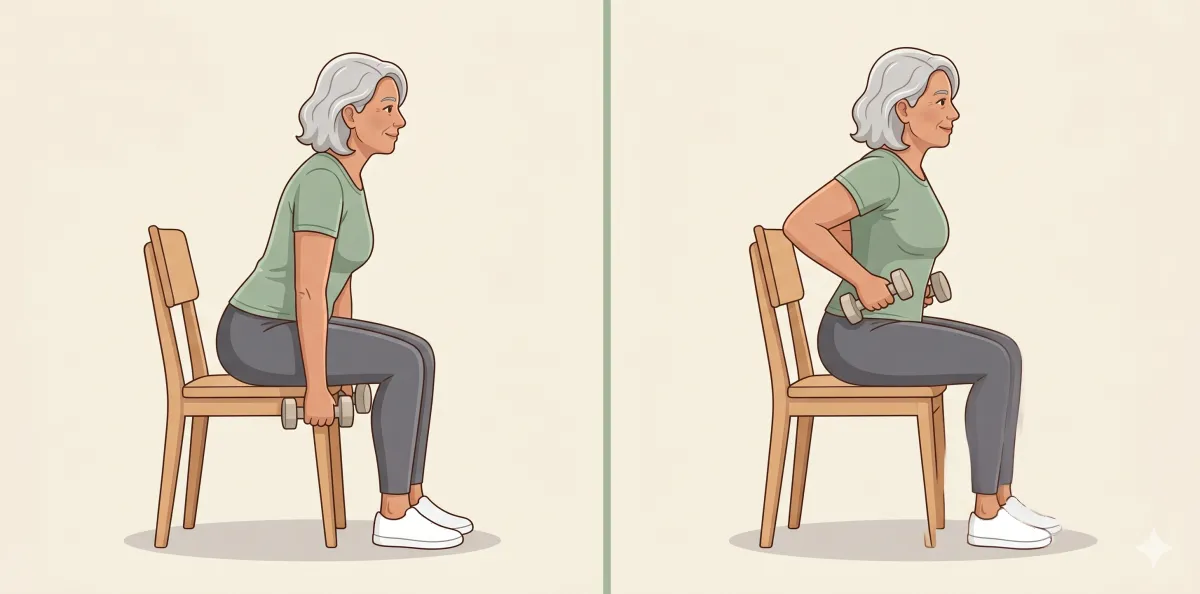
Seated Dumbbell Row: the starting position on the left and the finishing position on the right

Seated Dumbbell Row

  1. Sit toward the front of the chair and hinge forward slightly from the hips.
  2. Hold a dumbbell in each hand and pull both elbows straight back.
  3. Lower the weights with control and repeat.

Aim for: 10 reps · 2 sets

Builds upper-back strength and supports good posture.

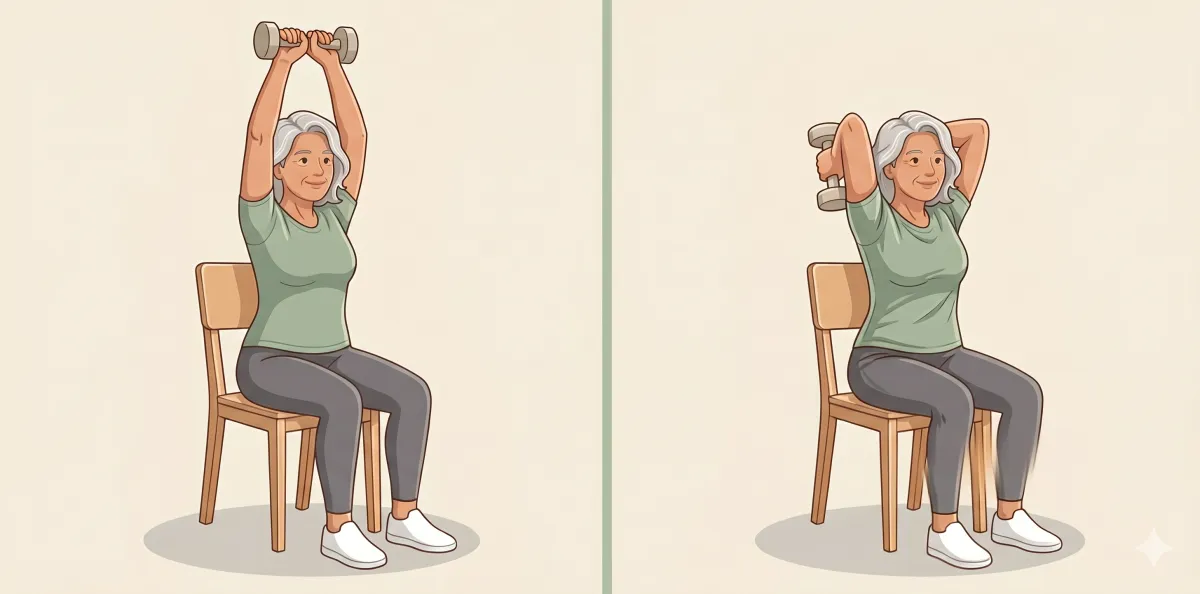
Overhead Triceps Extension: the starting position on the left and the finishing position on the right

Overhead Triceps Extension

  1. Sit tall and hold one dumbbell with both hands overhead.
  2. Lower the dumbbell behind the head by bending the elbows.
  3. Press it back overhead until the arms are nearly straight.

Aim for: 8–10 reps · 2 sets

Strengthens the back of the arms for pushing tasks.

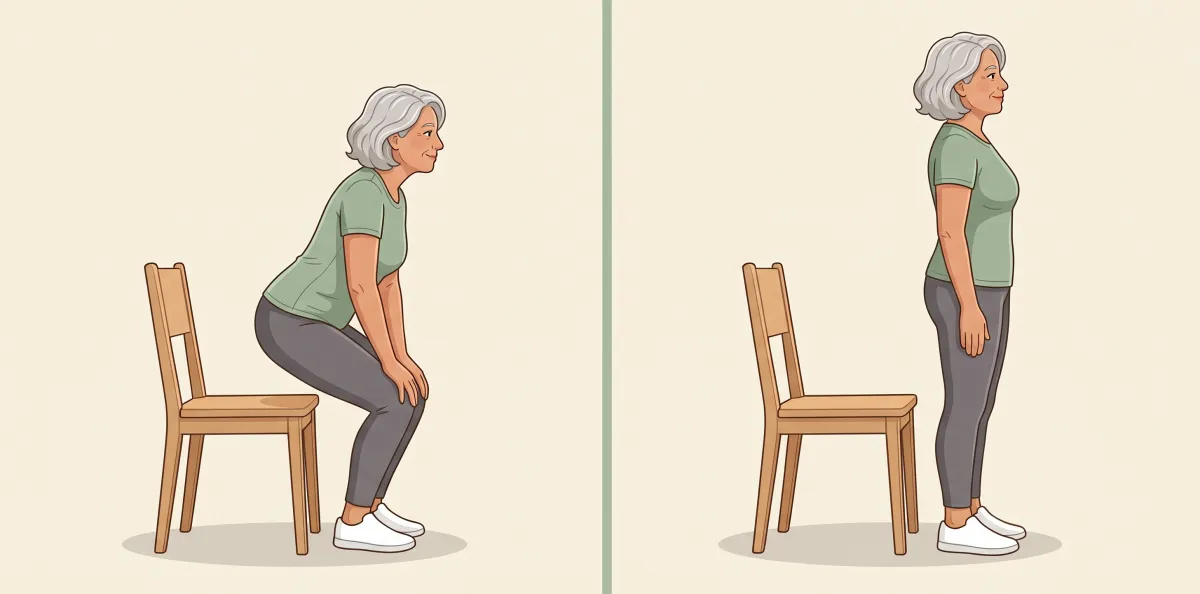
Sit-to-Stand: the starting position on the left and the finishing position on the right

Sit-to-Stand

  1. Sit toward the front of the chair, feet flat and slightly back.
  2. Lean forward and stand up, using hands on the chair only if needed.
  3. Sit back down slowly with control.

Aim for: 5–8 reps · 2 sets

Builds the leg and hip strength used every time you stand.

Print this chart

A one-file PDF with all 7 exercises, large step-by-step text, set and rep counts, and a simple figure for each move. Prints clearly in black and white — tape it to the fridge and follow it each day.

Free · No signup · US Letter · 7 exercises

Check with your doctor before starting a new exercise routine, especially if you have a health condition or have not been active for a while. Move slowly and stop any exercise that causes pain.

Tips

  • Start with the lightest dumbbells available and only increase when moves feel easy.
  • Move slowly — especially on the lowering phase — to get the most from each rep.
  • Keep breathing; never hold your breath during a lift.
  • Print on plain white paper for a clear black-and-white chart.

Common questions

What size dumbbells should a senior start with?
Many older adults start with one or two pounds. The right starting weight lets you complete all the reps with good form and only feel tired in the last two or three reps. Move up by one pound at a time when the current weight feels easy.
Is it safe to lift weights at an older age?
Gentle strength training with light weights is widely recommended for older adults. Start with very light weights, focus on slow and controlled movement, and build up gradually. Check with your doctor if you have any concerns about your specific situation.
How many days a week should I do dumbbell exercises?
Two to three days a week is a good target, with at least one rest day between sessions. On other days, the stretching and balance charts are a great complement and can be done daily without any issue.