SeniorFit

Back Exercises for Seniors (Free Printable Chart)

These gentle back exercises help older adults keep the spine mobile and build the support muscles that make sitting, standing, and moving around more comfortable. This free printable chart lists seven moves — a pelvic tilt, knee-to-chest, standing extension, shoulder-blade squeeze, cat-cow, forward fold, and a glute bridge — each with large step-by-step text.

Position
Seated and standing
Equipment
A sturdy chair (and a mat)
Exercises
7

The exercises

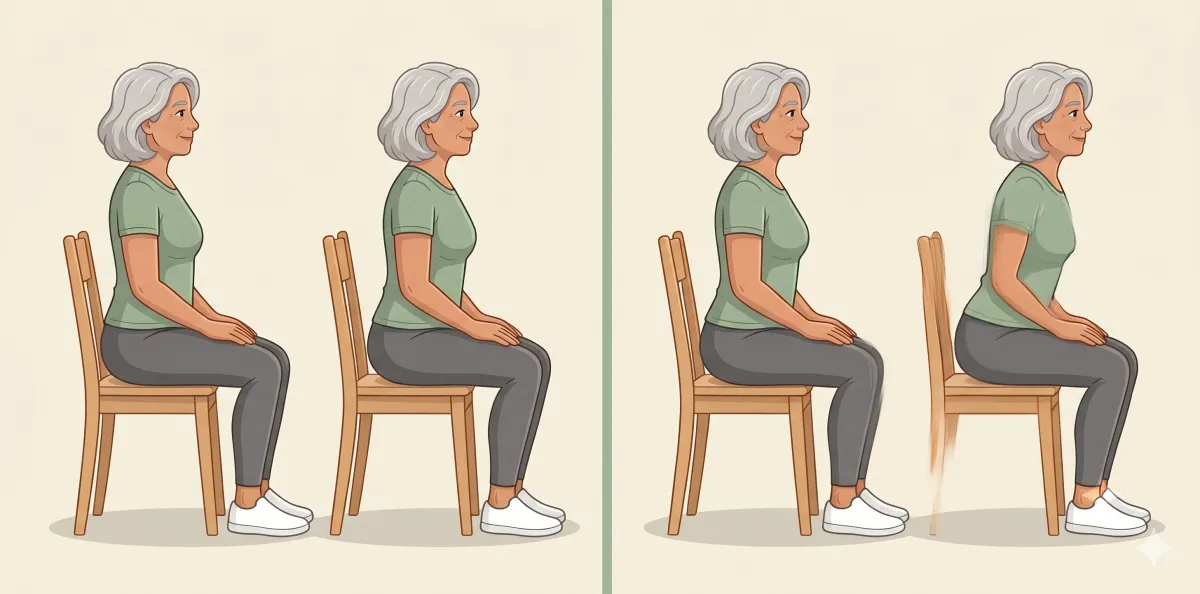
Seated Pelvic Tilt: the starting position on the left and the finishing position on the right

Seated Pelvic Tilt

  1. Sit tall with both feet flat on the floor.
  2. Gently rock the pelvis forward to arch the low back slightly.
  3. Then rock it back to flatten the low back. Move slowly and smoothly.

Aim for: 10 slow rocks · 2 sets

Keeps the low back mobile and eases stiffness.
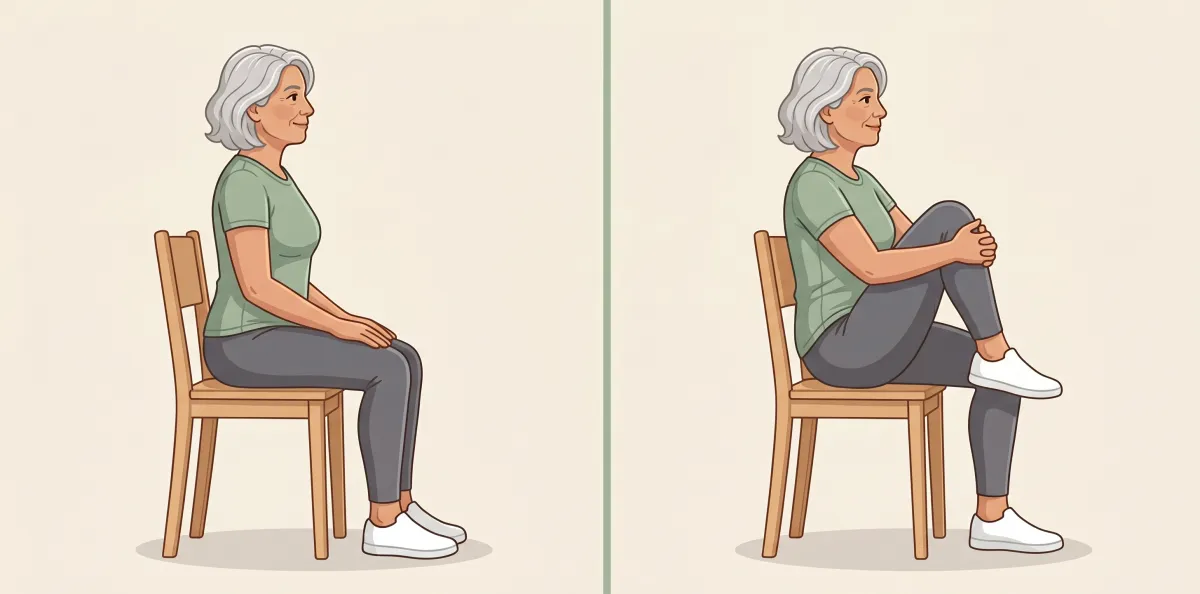
Seated Knee-to-Chest: the starting position on the left and the finishing position on the right

Seated Knee-to-Chest

  1. Sit tall toward the front of the chair, feet flat on the floor.
  2. Hold behind one knee and gently draw it up toward your chest.
  3. Hold, lower the foot, and switch legs.

Aim for: Hold 20 seconds each leg · 2 times

Gently releases the low back and glute.

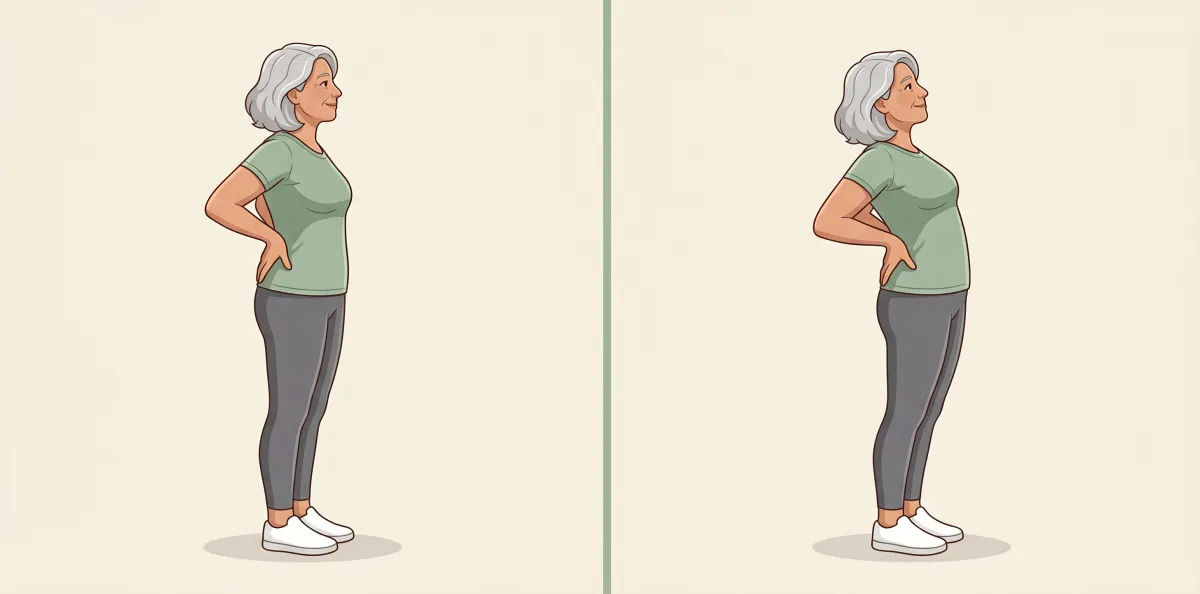
Standing Back Extension: the starting position on the left and the finishing position on the right

Standing Back Extension

  1. Stand tall behind the chair, holding the back for support.
  2. Place both hands on your low back and gently arch backward a few inches.
  3. Return to upright and repeat.

Aim for: 6–8 reps · 1 set

Eases a forward-bent posture and keeps the spine mobile.

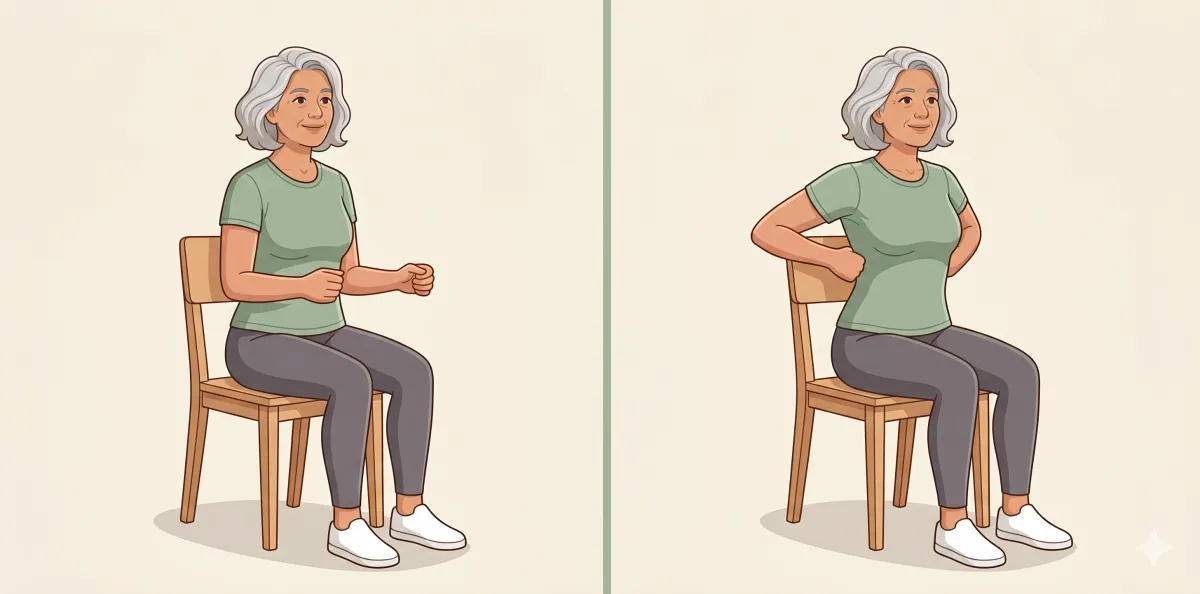
Seated Shoulder-Blade Squeeze: the starting position on the left and the finishing position on the right

Seated Shoulder-Blade Squeeze

  1. Sit tall with both arms relaxed at your sides.
  2. Draw your elbows gently back and squeeze the shoulder blades together.
  3. Hold two seconds, then release.

Aim for: 10–12 reps · 2 sets

Strengthens the upper back and supports good posture.

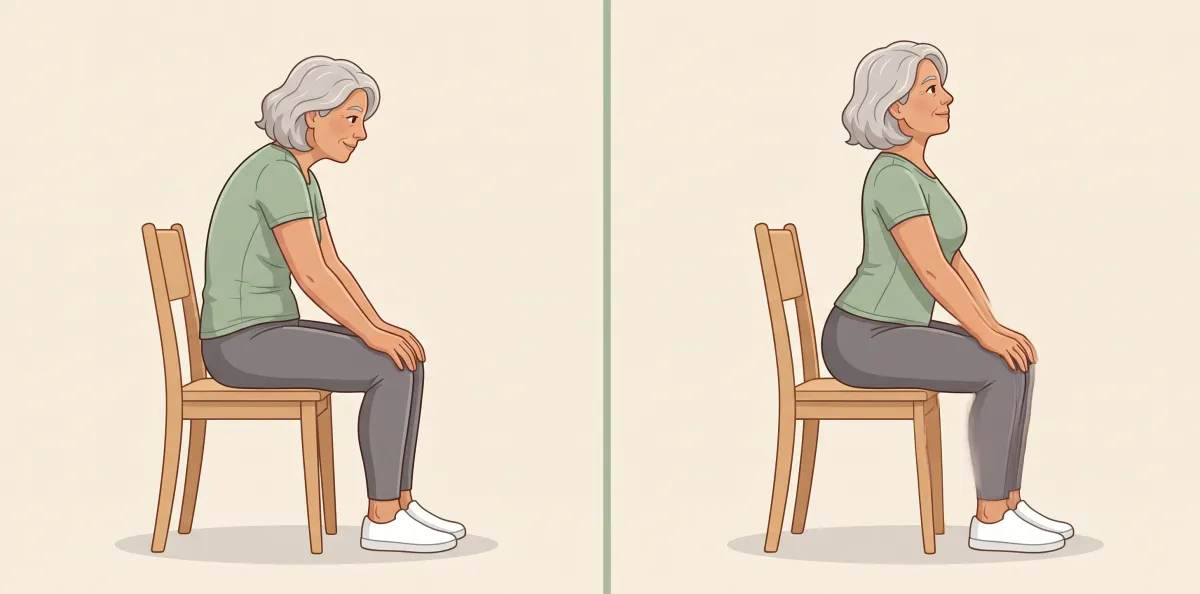
Seated Cat-Cow: the starting position on the left and the finishing position on the right

Seated Cat-Cow

  1. Sit tall with hands on your knees.
  2. Breathe in and arch gently, lifting the chest (cow).
  3. Breathe out and round the back, tucking the chin (cat).

Aim for: 6 slow rounds

Loosens the spine and eases back stiffness.

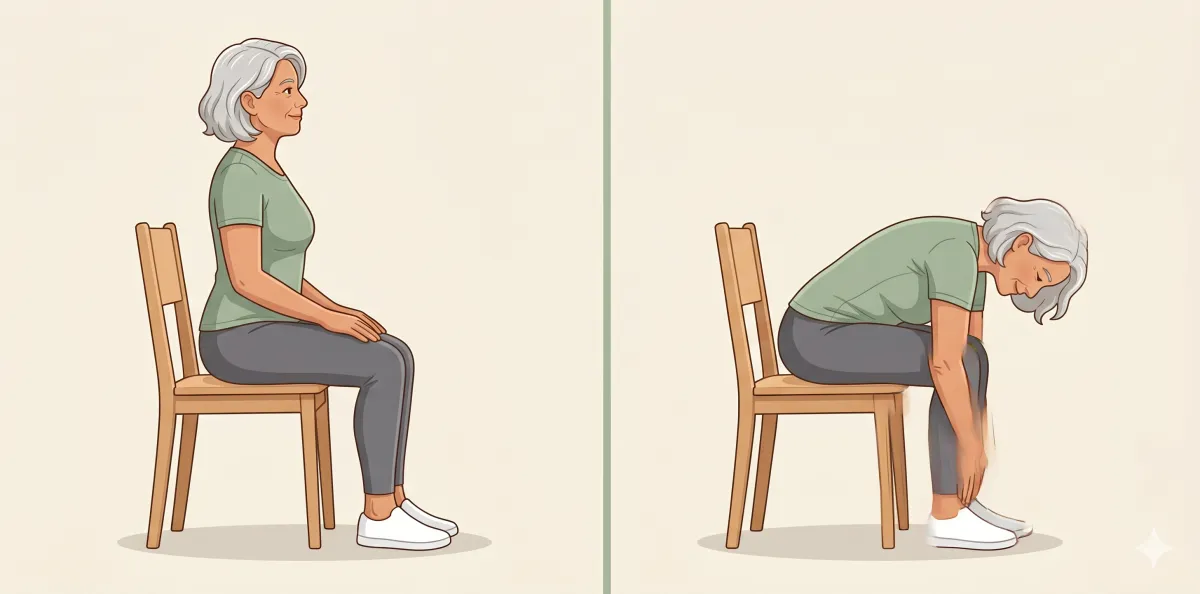
Seated Forward Fold: the starting position on the left and the finishing position on the right

Seated Forward Fold

  1. Sit tall toward the front of the chair, feet flat.
  2. Breathe out and hinge forward from the hips, hands sliding down your legs.
  3. Rest a moment, then roll up slowly to sitting.

Aim for: Hold 3 breaths · 2 times

Gently stretches the back and the backs of the legs.

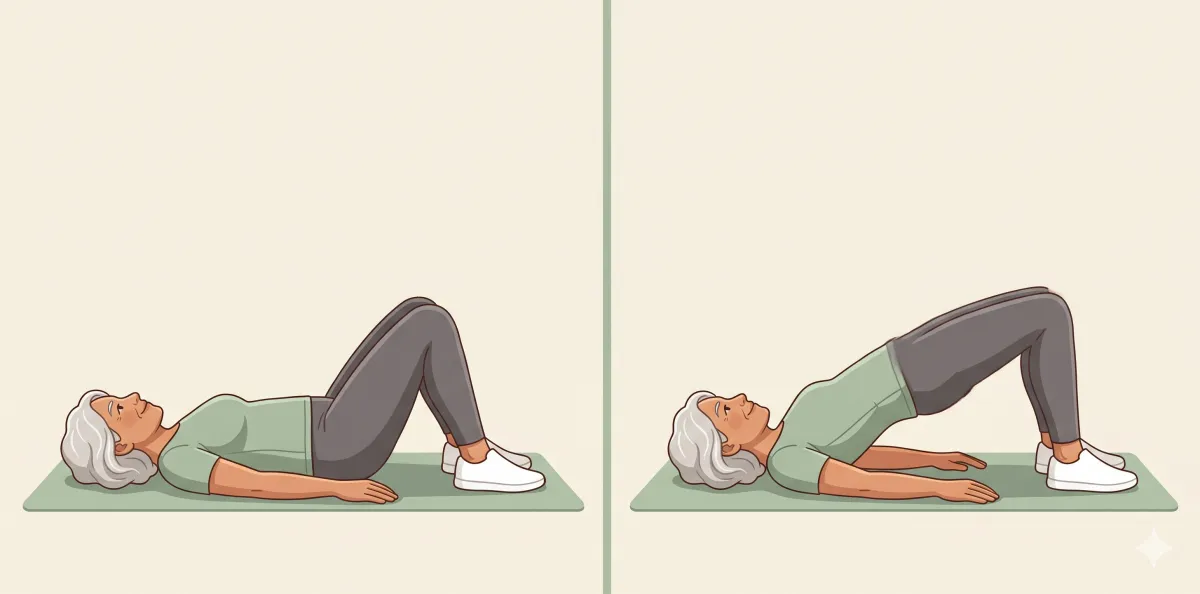
Glute Bridge: the starting position on the left and the finishing position on the right

Glute Bridge

  1. Lie on the mat with knees bent, feet flat on the floor.
  2. Breathe out and press through your heels to lift the hips into a bridge.
  3. Hold for two seconds, then lower slowly.

Aim for: 8–10 reps · 2 sets

Strengthens the glutes and low back.

Print this chart

A one-file PDF with all 7 exercises, large step-by-step text, set and rep counts, and a simple figure for each move. Prints clearly in black and white — tape it to the fridge and follow it each day.

Free · No signup · US Letter · 7 exercises

Check with your doctor before starting a new exercise routine, especially if you have a health condition or have not been active for a while. Move slowly and stop any exercise that causes pain.

Tips

  • Move slowly and stop any exercise that sharpens discomfort.
  • Use a non-slip mat for the floor exercises and a firm chair for seated moves.
  • Breathe steadily — exhale on the effort and inhale on the return.
  • Print on plain white paper for a clear black-and-white chart.

Common questions

Can I do back exercises if my back is stiff?
Gentle, slow movement is often helpful for stiffness. Start with the seated pelvic tilt and cat-cow, which are very low load. If stiffness is severe or has lasted more than a few days, check with your doctor before starting a routine.
How often should I do back exercises?
Many people do gentle back mobility work daily and strengthening exercises two to three days a week. The seated moves on this chart are mild enough for daily use; the glute bridge and extension work best with a rest day in between.
Are floor exercises necessary?
The glute bridge is the only floor move on this chart. If getting down to the floor is difficult, skip it and focus on the six seated and standing exercises — they still provide good back mobility and upper-back strength work.