SeniorFit

Core Exercises for Seniors (Free Printable Chart)

A strong core helps older adults sit tall, move with more control, and feel steadier on their feet. This free printable chart lists seven gentle trunk-strengthening moves — oblique bends, knee-to-elbow, a seated leg raise, bird-dog, side crunch, marching, and a twist — each with large step-by-step text and a rep count. Move slowly and breathe with each repetition.

Position
Seated and standing
Equipment
A sturdy chair without wheels
Exercises
7

The exercises

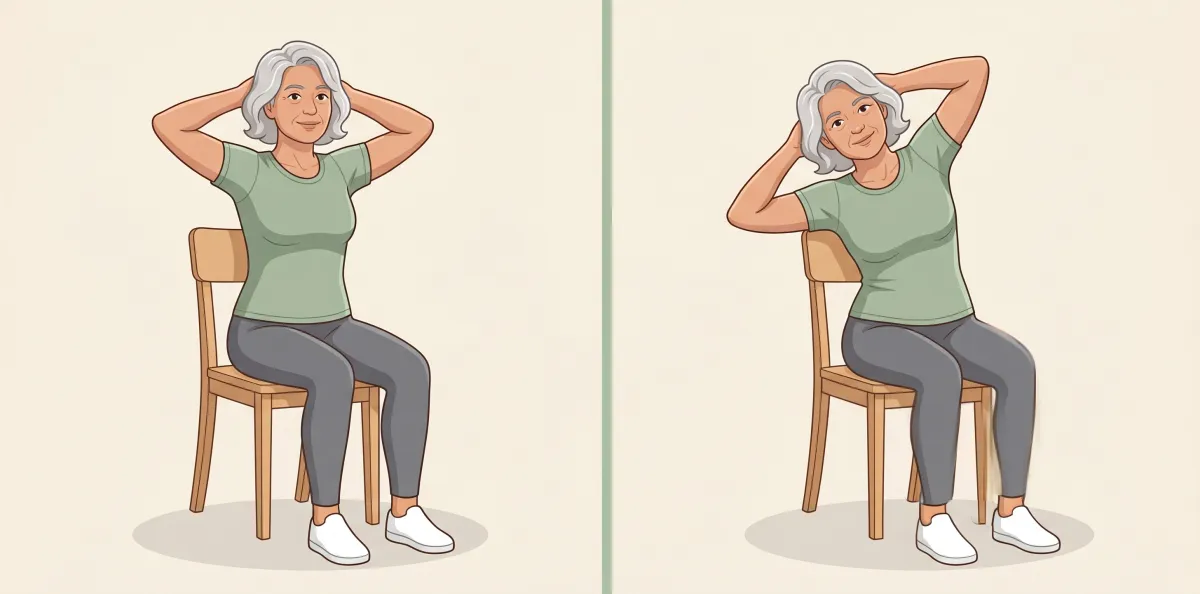
Seated Oblique Side Bend: the starting position on the left and the finishing position on the right

Seated Oblique Side Bend

  1. Sit tall with both hands lightly behind your head.
  2. Breathe out and bend slowly toward one hip.
  3. Return to center and bend to the other side.

Aim for: 8 reps each side · 2 sets

Strengthens the side-waist muscles for turning and balance.

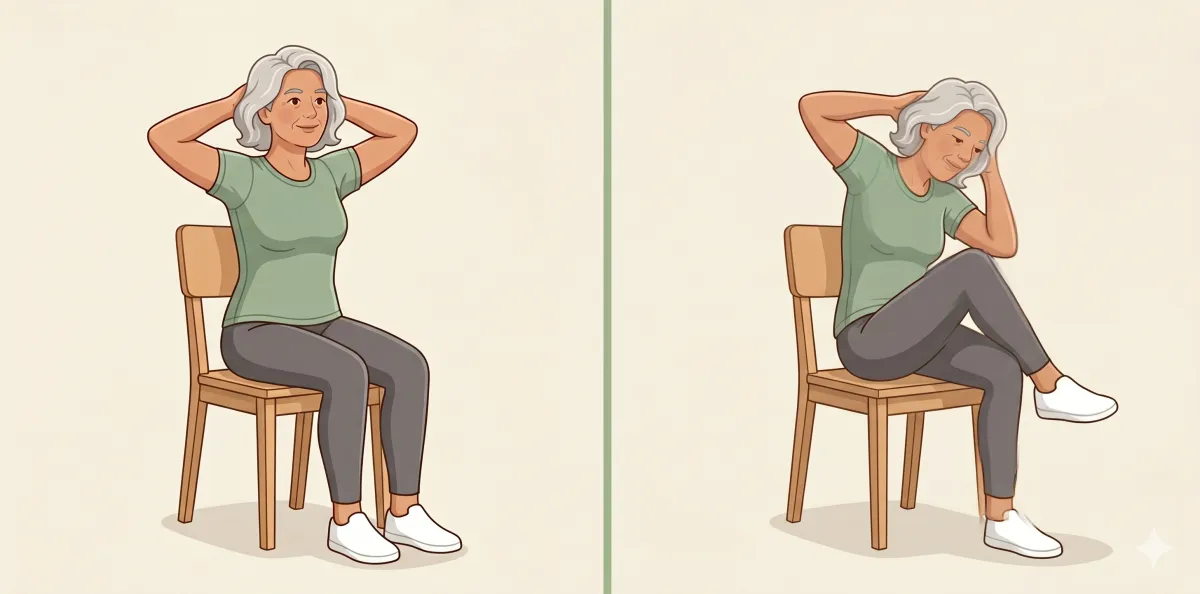
Seated Knee-to-Elbow: the starting position on the left and the finishing position on the right

Seated Knee-to-Elbow

  1. Sit tall with hands lightly behind your head.
  2. Lift your right knee and bring it toward your left elbow with a gentle twist.
  3. Lower and switch sides.

Aim for: 8 reps each side · 2 sets

Works the core and obliques together.

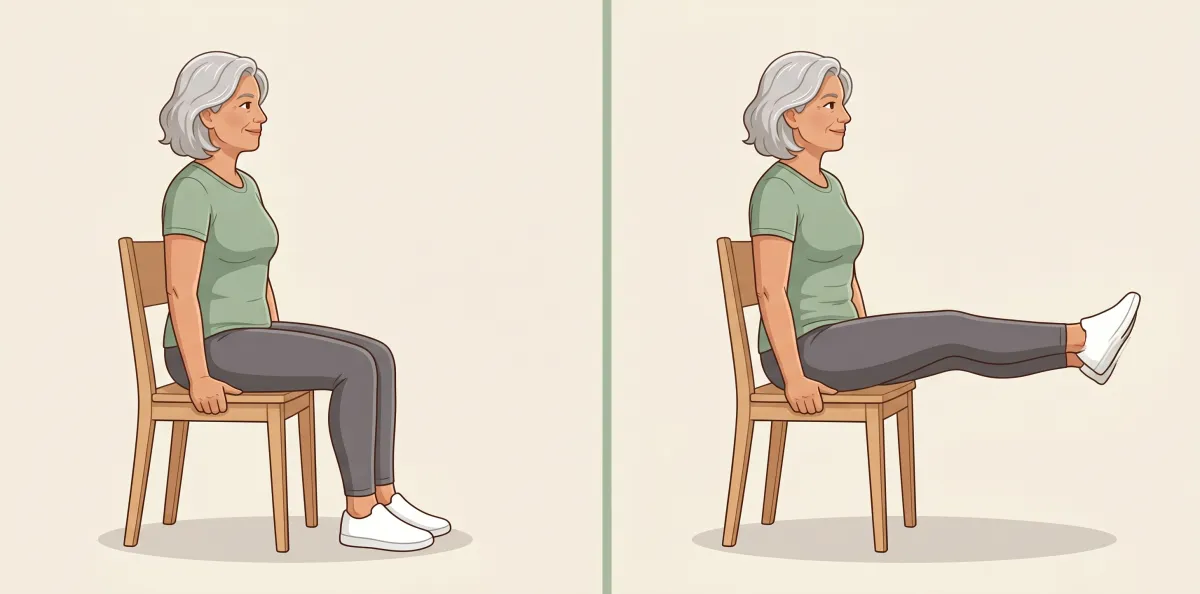
Seated Leg Raise: the starting position on the left and the finishing position on the right

Seated Leg Raise

  1. Sit toward the front of the chair and grip the seat.
  2. Slowly lift both lower legs out until they are nearly straight.
  3. Lower them with control. Keep your back tall.

Aim for: 8–10 reps · 2 sets

Builds lower-core strength and hip-flexor control.

Chair Bird-Dog: the starting position on the left and the finishing position on the right

Chair Bird-Dog

  1. Sit tall with both feet flat on the floor, hands on your knees.
  2. Slowly extend your right arm forward while lifting your left foot a few inches.
  3. Hold two seconds, lower, and switch sides.

Aim for: 6 reps each side · 2 sets

Challenges core stability and coordination.

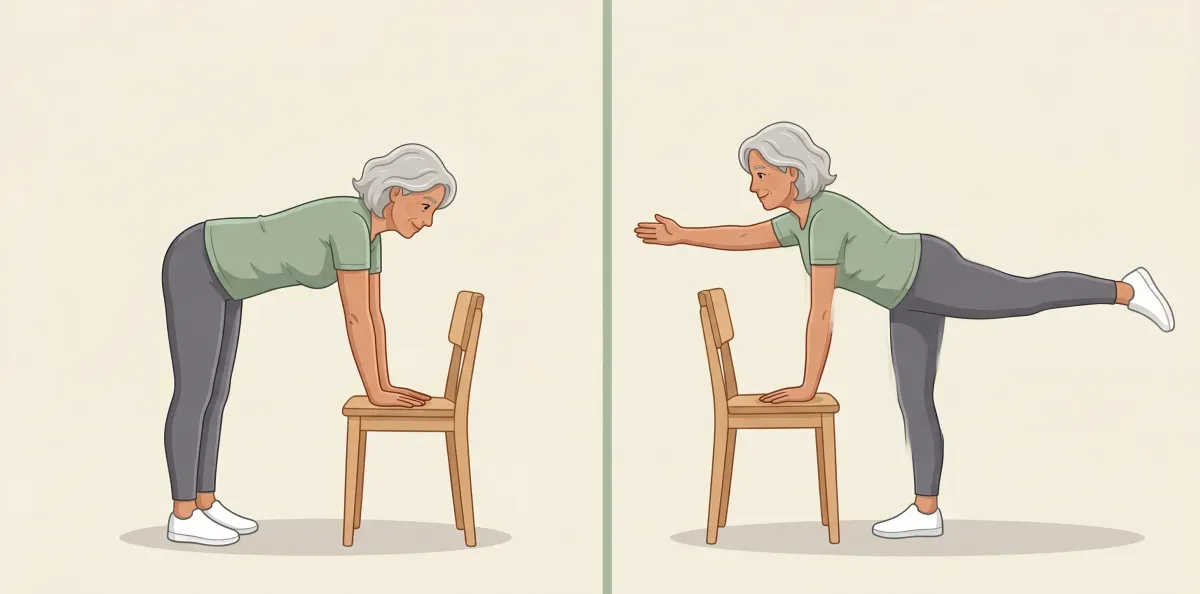
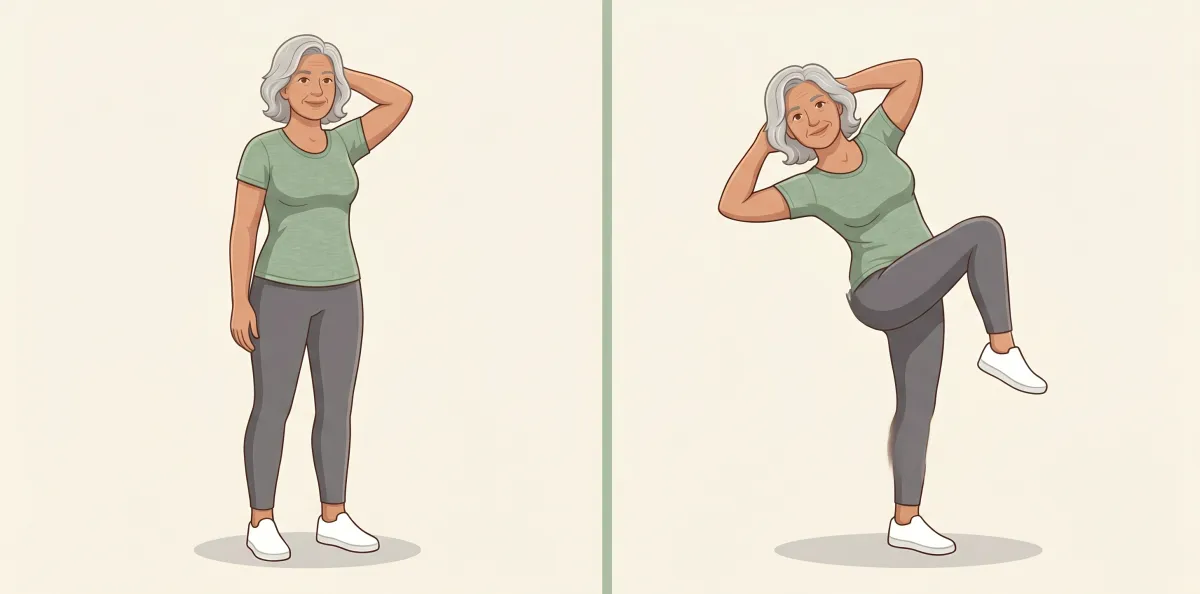
Standing Side Crunch: the starting position on the left and the finishing position on the right

Standing Side Crunch

  1. Stand tall behind the chair, holding the back with one hand.
  2. Lift one knee out to the side while the opposite elbow moves toward it.
  3. Lower and switch sides.

Aim for: 8 reps each side · 2 sets

Works the obliques and lightly challenges balance.

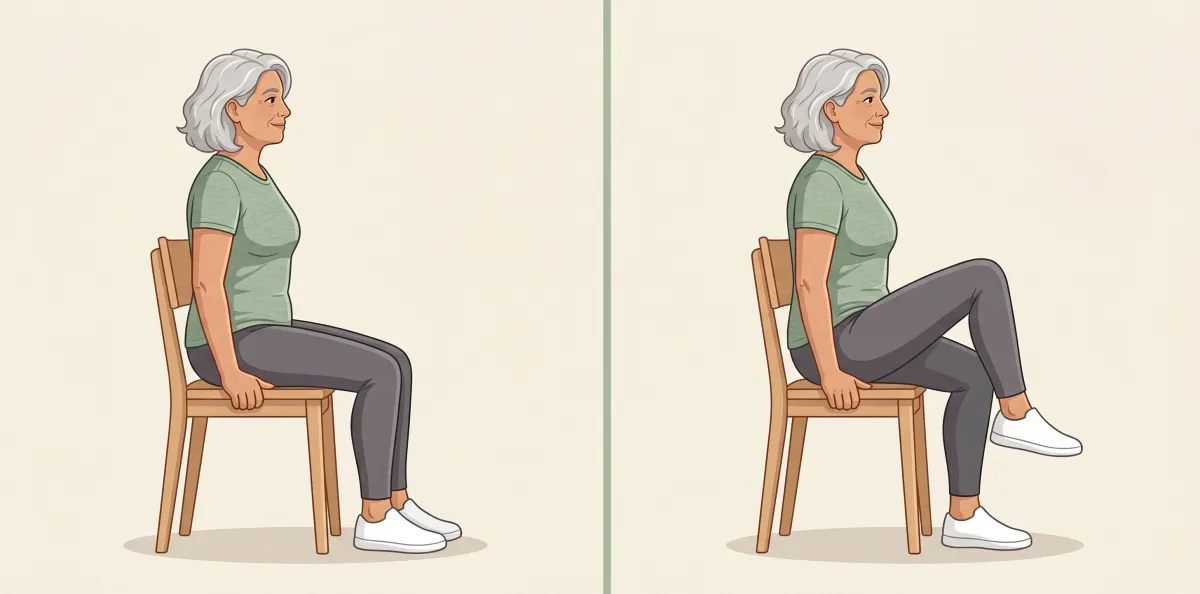
Seated Marching: the starting position on the left and the finishing position on the right

Seated Marching

  1. Sit tall near the front of the chair, feet flat on the floor.
  2. Lift one knee up as high as is comfortable, then lower it.
  3. Lift the other knee. Keep a steady, walking rhythm.

Aim for: 20 marches total (10 each leg) · 2 sets

Warms up the hips and legs and gets the blood moving.

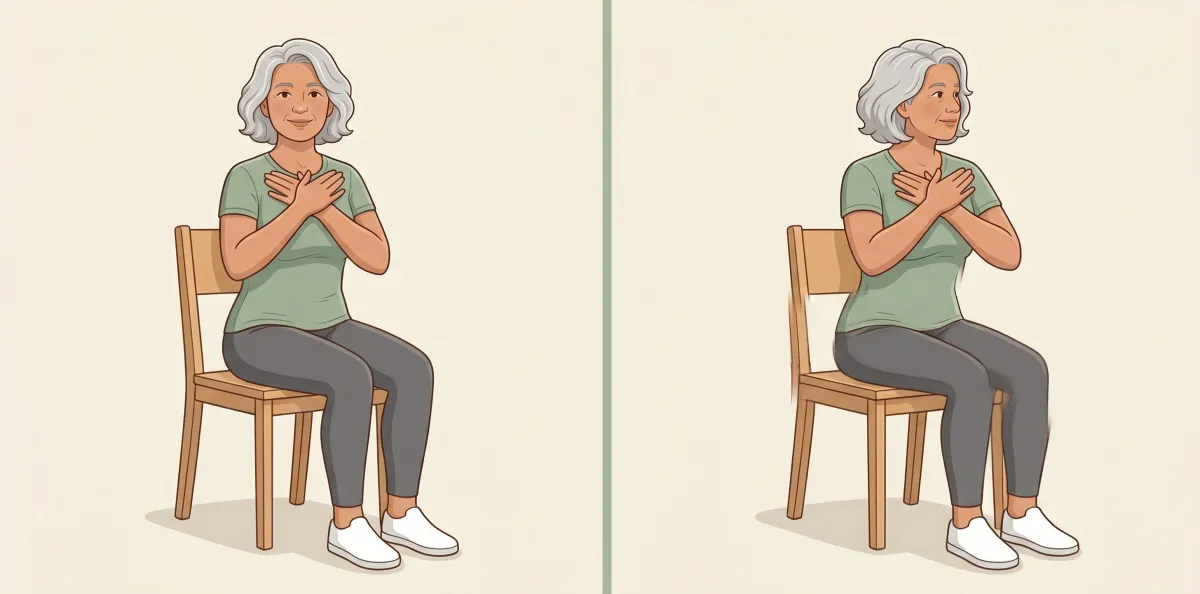
Seated Trunk Twist: the starting position on the left and the finishing position on the right

Seated Trunk Twist

  1. Sit tall, arms crossed loosely over your chest.
  2. Turn your upper body gently to the right and look over your shoulder.
  3. Return to center, then turn gently to the left.

Aim for: 6–8 turns each side · 1 set

Loosens the spine for easier turning and reaching.

Print this chart

A one-file PDF with all 7 exercises, large step-by-step text, set and rep counts, and a simple figure for each move. Prints clearly in black and white — tape it to the fridge and follow it each day.

Free · No signup · US Letter · 7 exercises

Check with your doctor before starting a new exercise routine, especially if you have a health condition or have not been active for a while. Move slowly and stop any exercise that causes pain.

Tips

  • Breathe out on the effort part of each movement and breathe in as you return.
  • Keep a tall posture — slouching reduces how much the core works.
  • Start with one set and add a second as the moves get easier.
  • Print on plain white paper for a clear black-and-white chart.

Common questions

Why is core strength important for older adults?
The muscles of the trunk support the spine, help with balance, and make daily tasks like getting up, bending, and carrying easier. Even gentle core work done regularly builds the stability used in almost every movement.
Can I do core exercises if my back gets sore?
Gentle seated core moves are often easier on the back than floor exercises. Move slowly, stop any move that sharpens discomfort, and check with your doctor or physical therapist if you are unsure what is right for your situation.
How soon will I notice a difference?
Most people feel a little more stable and upright within a few weeks of doing core work on most days. The biggest changes often come from sitting taller automatically, which happens gradually as the exercises grow easier.