SeniorFit

Leg-Strengthening Exercises for Seniors (Free Printable Chart)

Strong legs make standing, walking, and climbing stairs easier and steadier for older adults. This free printable chart lists seven leg moves — sit-to-stands, knee extensions, calf and side leg raises, and a supported step — each with large step-by-step text and a rep count. Hold a sturdy chair for support and move slowly with control.

Position
Seated and standing
Equipment
A sturdy chair to sit on and hold
Exercises
7

The exercises

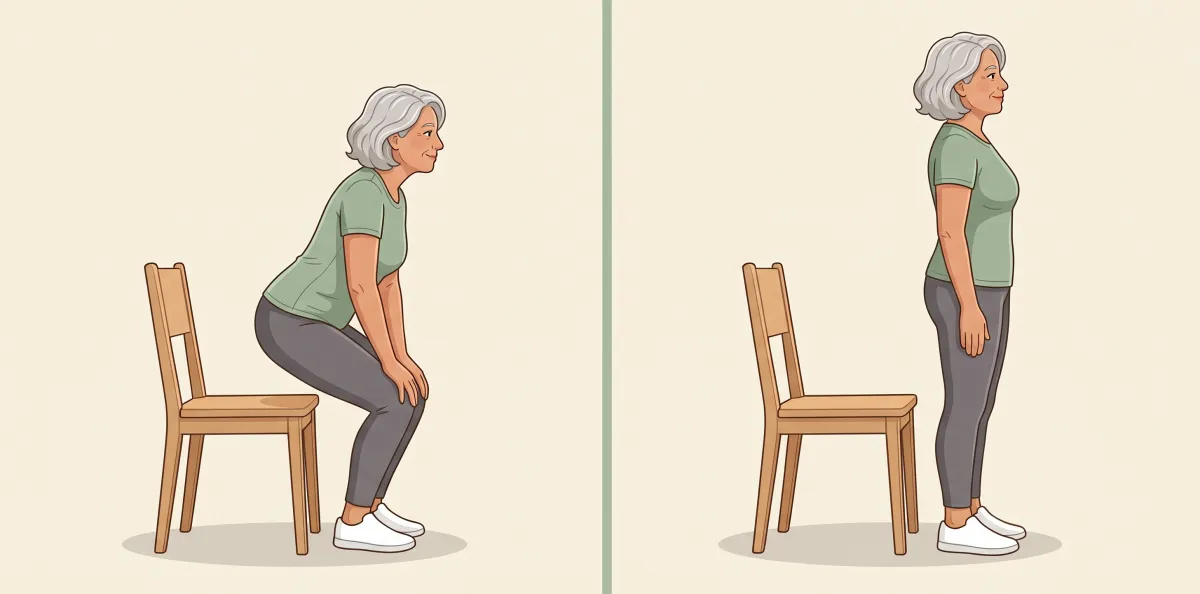
Sit-to-Stand: the starting position on the left and the finishing position on the right

Sit-to-Stand

  1. Sit toward the front of the chair, feet flat and slightly back.
  2. Lean forward and stand, using hands only if needed.
  3. Lower yourself back down slowly with control.

Aim for: 8–10 reps · 2 sets

Builds the core leg strength used to stand up.
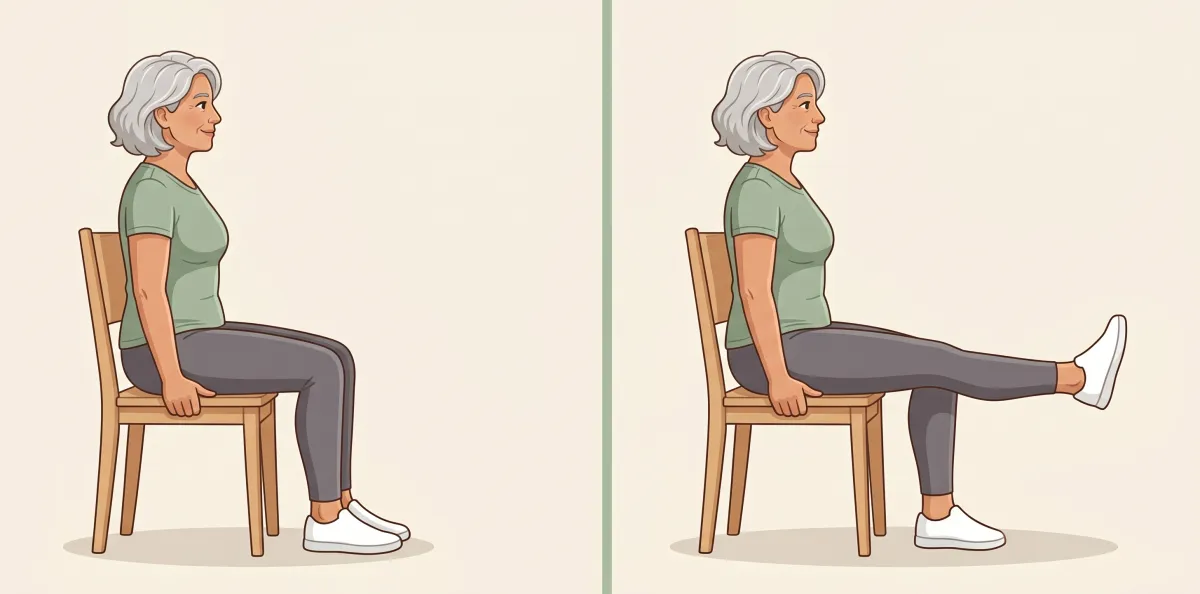
Seated Knee Extension: the starting position on the left and the finishing position on the right

Seated Knee Extension

  1. Sit tall with both feet flat.
  2. Straighten one leg out until level, hold two seconds.
  3. Lower slowly and switch legs.

Aim for: 10 reps each leg · 2 sets

Strengthens the front of the thigh.
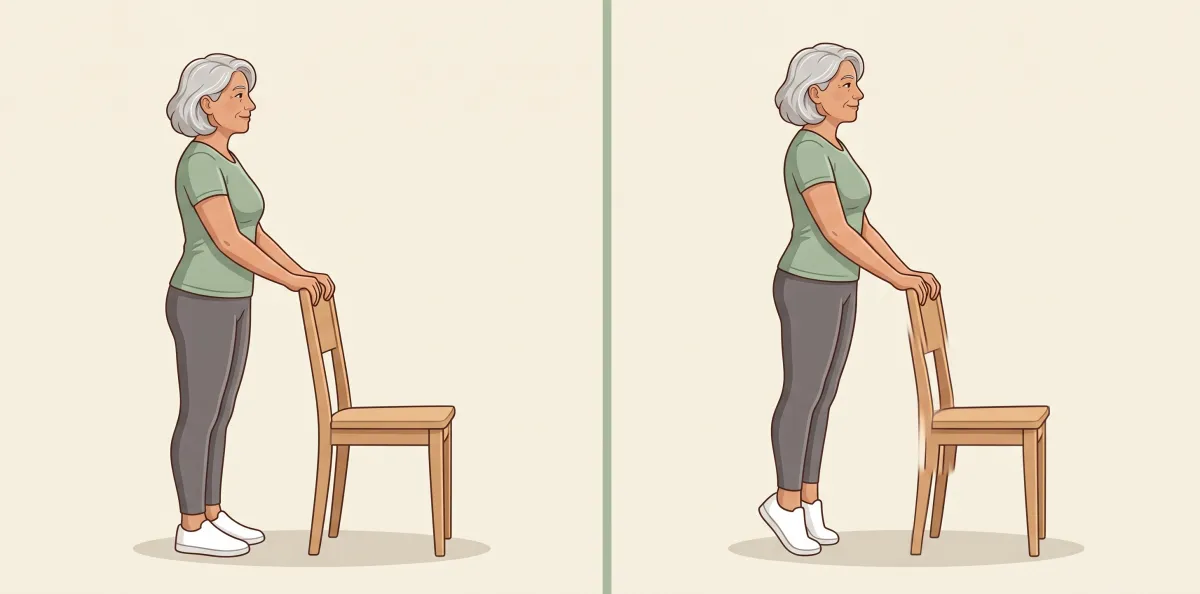
Calf Raises: the starting position on the left and the finishing position on the right

Calf Raises

  1. Stand tall behind a chair, hands on the back.
  2. Rise up onto the balls of your feet.
  3. Lower your heels slowly.

Aim for: 12 reps · 2 sets

Strengthens the calves for push-off when walking.
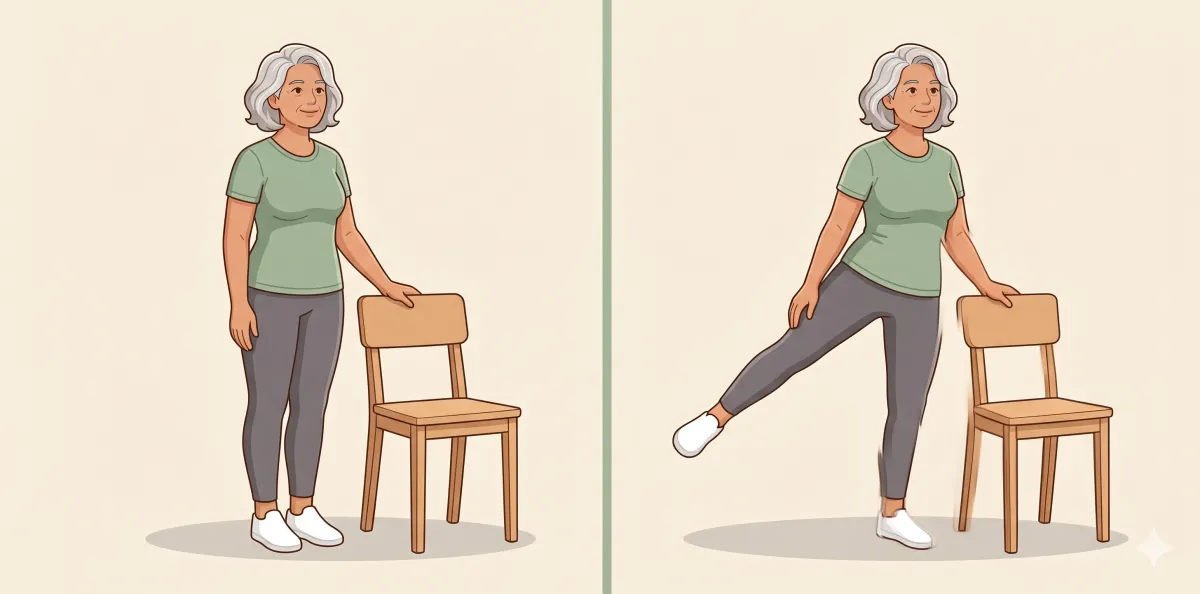
Standing Side Leg Raise: the starting position on the left and the finishing position on the right

Standing Side Leg Raise

  1. Stand tall behind a chair, holding the back.
  2. Lift one leg out to the side, keeping it straight.
  3. Lower it slowly and switch legs.

Aim for: 10 reps each leg · 2 sets

Works the outer hips for steadier walking.
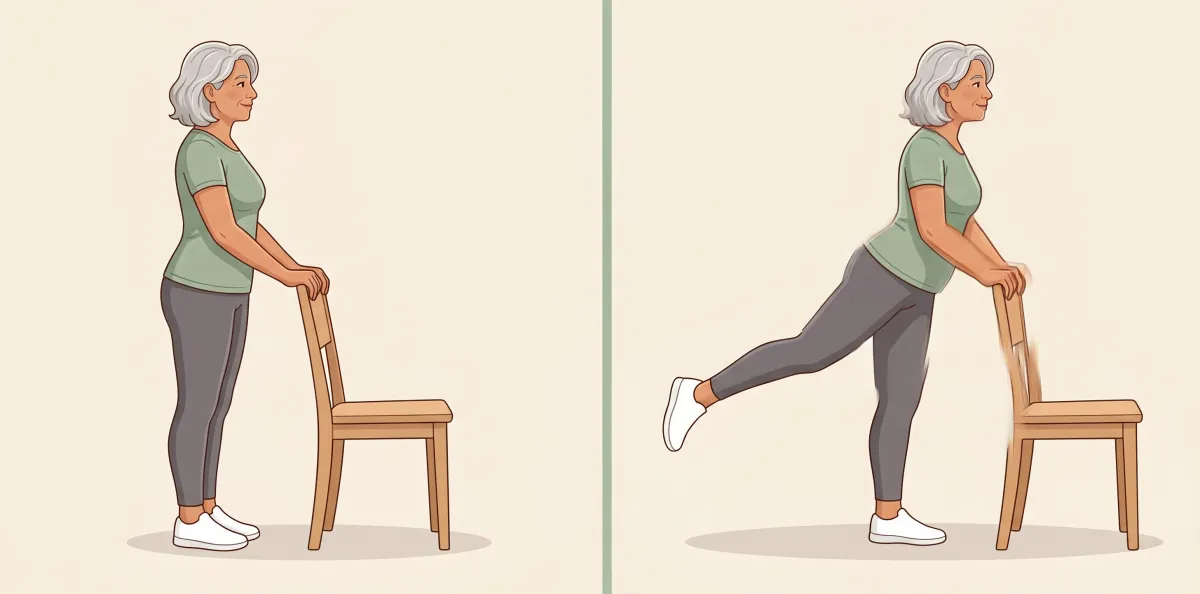
Standing Back Leg Raise: the starting position on the left and the finishing position on the right

Standing Back Leg Raise

  1. Stand tall behind a chair, holding the back.
  2. Lift one leg straight back without leaning forward.
  3. Lower it slowly and switch legs.

Aim for: 10 reps each leg · 2 sets

Strengthens the buttocks and hamstrings.

Mini Squats: the starting position on the left and the finishing position on the right

Mini Squats

  1. Stand tall behind a chair, holding the back.
  2. Bend your knees and lower a few inches, as if to sit.
  3. Press through your heels to stand tall again.

Aim for: 8–10 reps · 2 sets

Builds thigh and hip strength for stairs and standing.
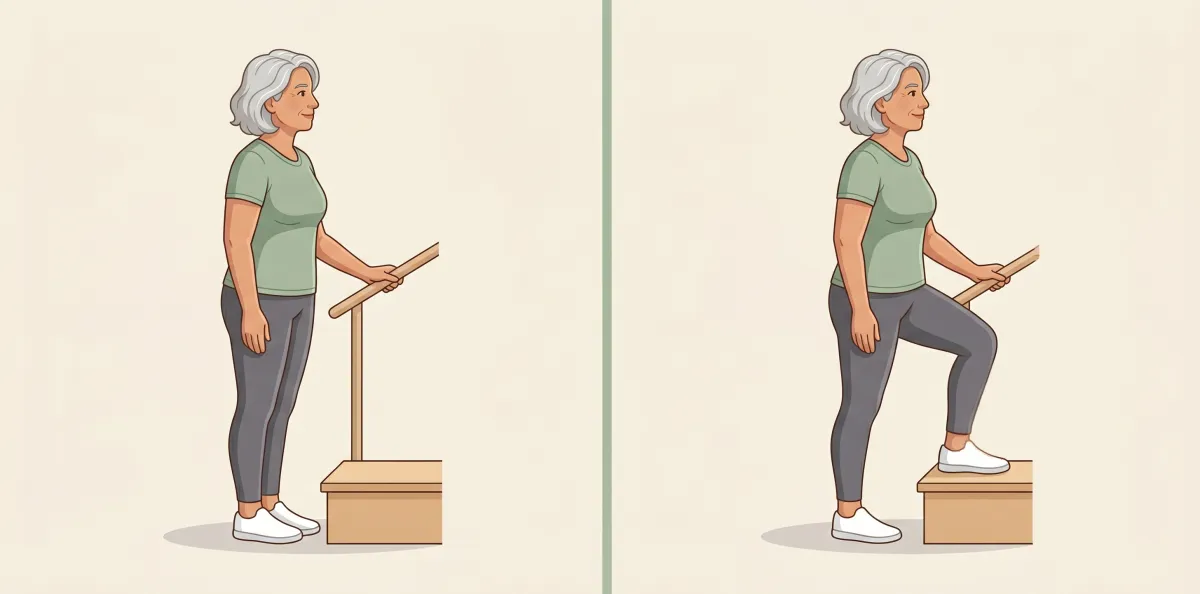
Supported Step-Up: the starting position on the left and the finishing position on the right

Supported Step-Up

  1. Stand at the bottom of a step, holding a rail.
  2. Step up with one foot, bring the other up to meet it.
  3. Step back down one foot at a time. Lead with the other foot next time.

Aim for: 6–8 step-ups each leg · 1 set

Practices the leg strength used for stairs.

Print this chart

A one-file PDF with all 7 exercises, large step-by-step text, set and rep counts, and a simple figure for each move. Prints clearly in black and white — tape it to the fridge and follow it each day.

Free · No signup · US Letter · 7 exercises

Check with your doctor before starting a new exercise routine, especially if you have a health condition or have not been active for a while. Move slowly and stop any exercise that causes pain.

Tips

  • Hold a sturdy chair or rail for support on every standing move.
  • Press through your heels, not your toes, when you stand or squat.
  • Rest 30–60 seconds between sets and stop if a joint hurts.
  • Print on plain white paper for a clear black-and-white chart.

Common questions

How many days a week should I do leg exercises?
Two to three days a week of leg strengthening, with a rest day in between, gives muscles time to recover and grow stronger. On other days you can still do gentle balance and stretching work from the other charts.
Can I build leg strength while seated?
Yes. Sit-to-stands and seated knee extensions on this chart strongly work the thighs and hips. If standing is tiring, focus on the seated moves first and add the supported standing ones as you grow stronger.
How do I know if the exercises are too hard?
You should feel your muscles working but be able to keep good form and breathe steadily. Sharp pain, dizziness, or losing your balance are signs to stop, rest, and try fewer reps next time.