SeniorFit

Neck & Shoulder Exercises for Seniors (Free Printable Chart)

Gentle neck and shoulder movements help older adults ease stiffness, turn their head more freely, and sit with better posture. This free printable chart lists seven seated exercises — neck rotation, chin tuck, neck nod, neck stretch, shoulder rolls, shoulder-blade squeeze, and a side stretch — each with large step-by-step text and a hold time. Move slowly and never force a stretch.

Position
Seated
Equipment
A sturdy chair without wheels
Exercises
7

The exercises

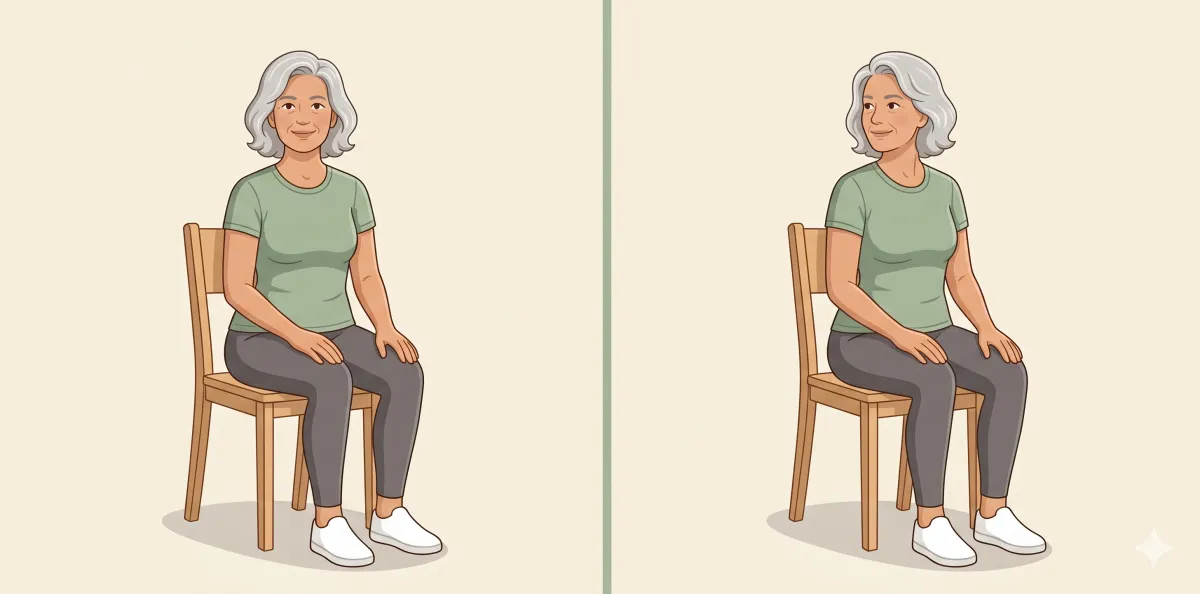
Seated Neck Rotation: the starting position on the left and the finishing position on the right

Seated Neck Rotation

  1. Sit tall with shoulders relaxed.
  2. Turn your head slowly to look over one shoulder.
  3. Return to center and turn to the other side.

Aim for: 8 turns each side · 1 set

Keeps the neck mobile for looking over your shoulder safely.
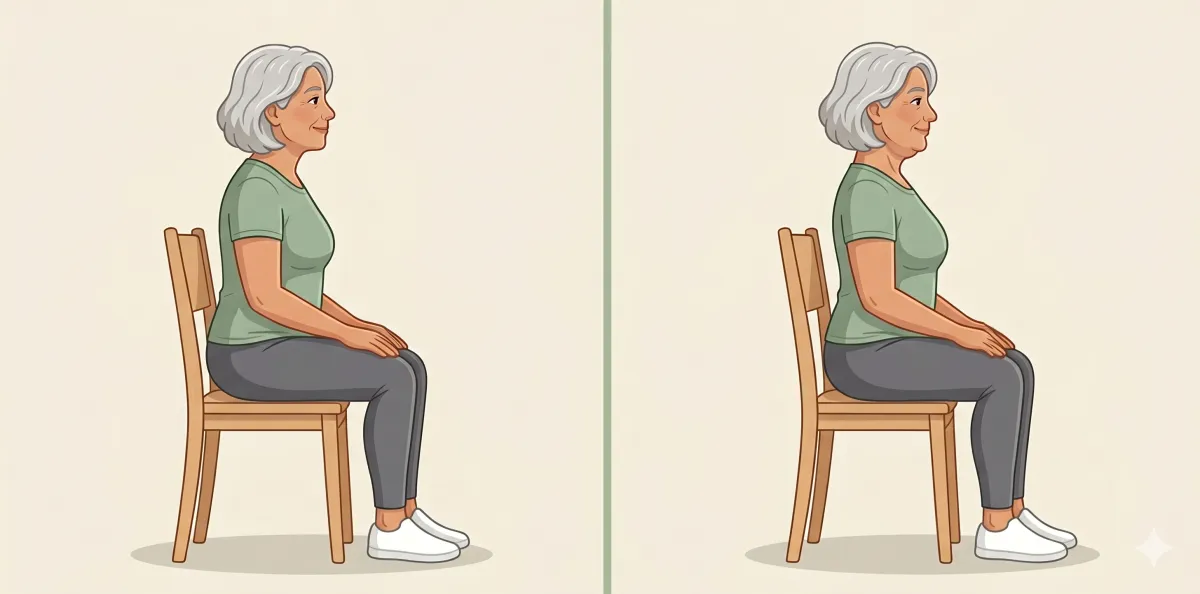
Seated Chin Tuck: the starting position on the left and the finishing position on the right

Seated Chin Tuck

  1. Sit tall and look straight ahead.
  2. Draw your chin straight back as if making a double chin.
  3. Hold for two seconds, then relax.

Aim for: 10 reps · 2 sets

Lengthens the back of the neck and encourages upright posture.
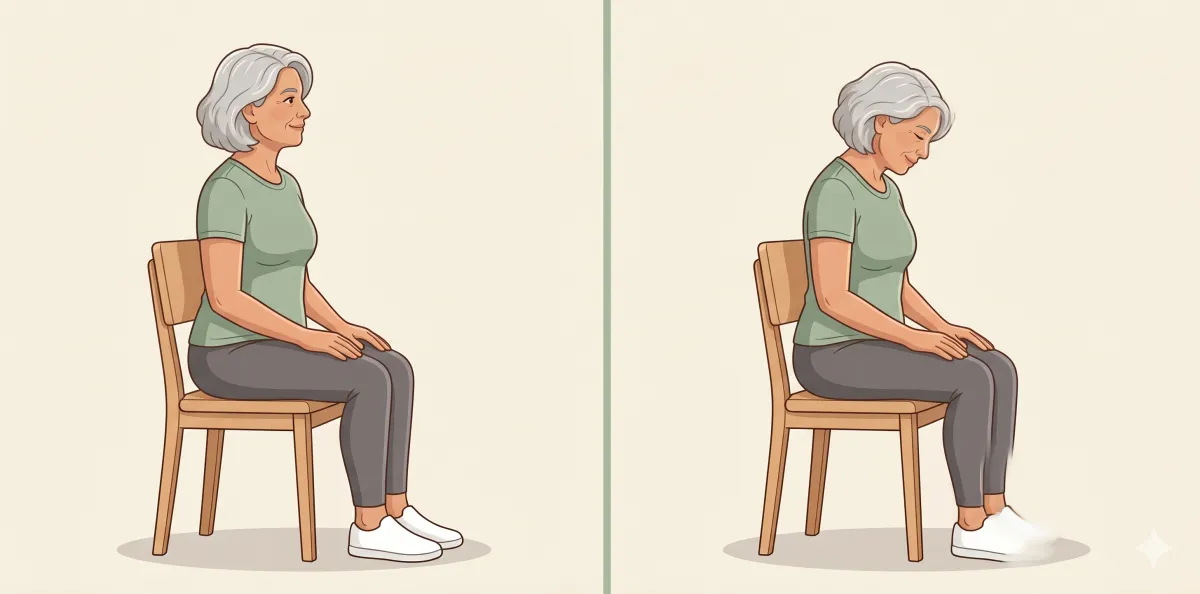
Seated Neck Nod: the starting position on the left and the finishing position on the right

Seated Neck Nod

  1. Sit tall with shoulders relaxed.
  2. Lower your chin gently toward your chest.
  3. Return to neutral and repeat slowly.

Aim for: 8 reps · 1 set

Gently stretches the back of the neck.
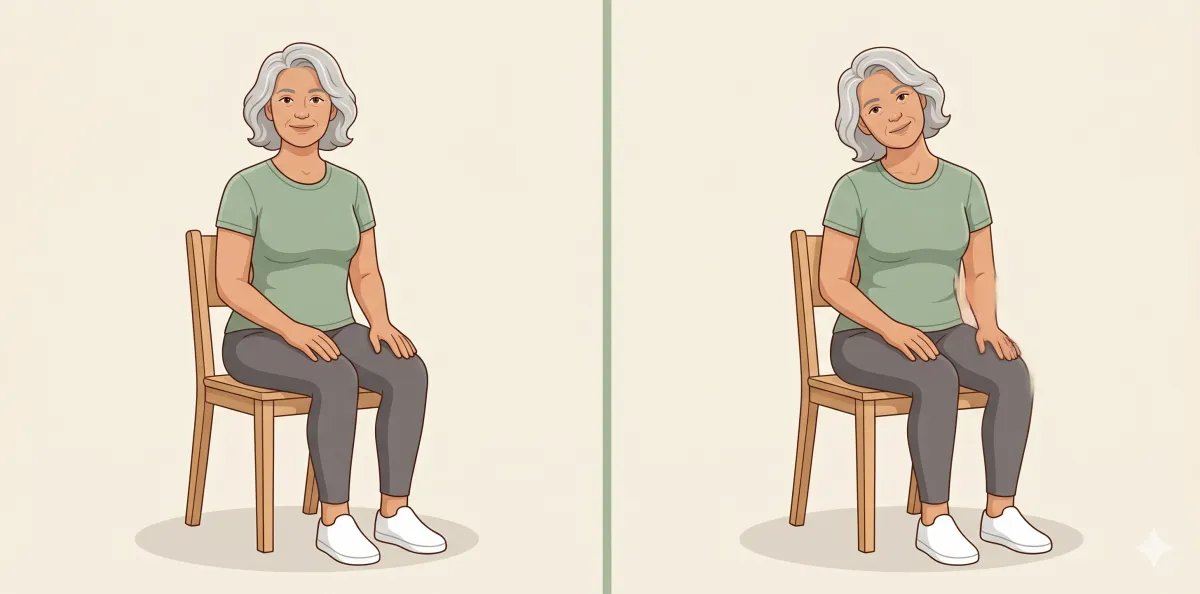
Seated Neck Stretch: the starting position on the left and the finishing position on the right

Seated Neck Stretch

  1. Sit or stand tall with shoulders relaxed.
  2. Tilt your right ear gently toward your right shoulder.
  3. Hold, then switch to the left side.

Aim for: Hold 15 seconds each side · 2 times

Eases neck tension and helps you turn your head.
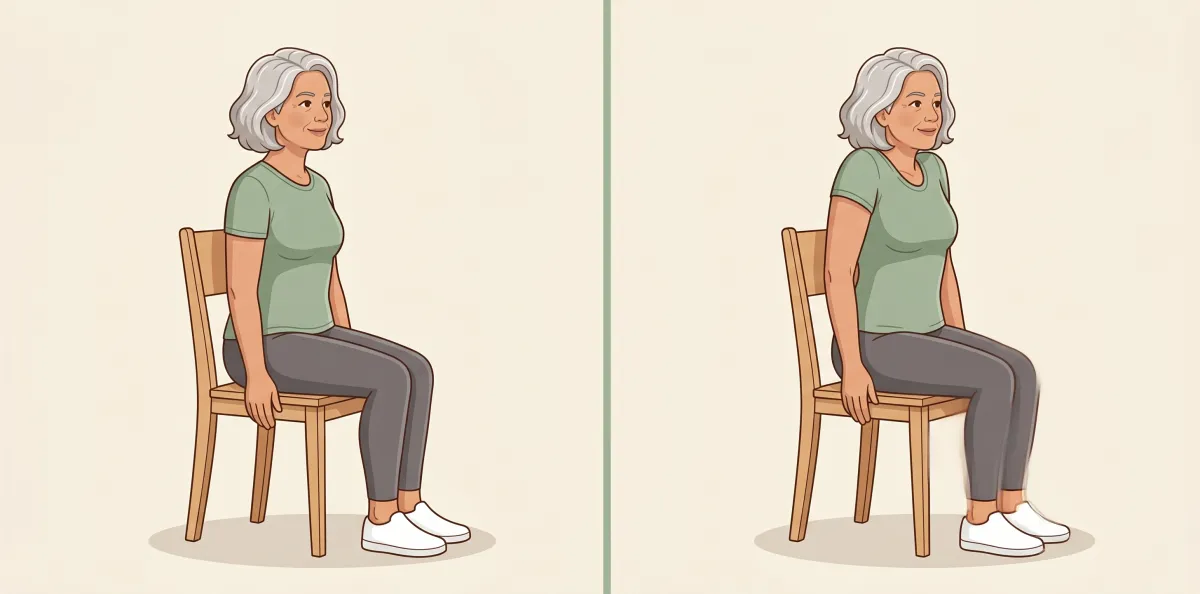
Seated Shoulder Rolls: the starting position on the left and the finishing position on the right

Seated Shoulder Rolls

  1. Sit tall with arms relaxed.
  2. Roll both shoulders slowly up, back, and down in a circle.
  3. Do a set rolling backward, then a set rolling forward.

Aim for: 8 rolls each direction · 1 set

Eases shoulder and upper-back stiffness.
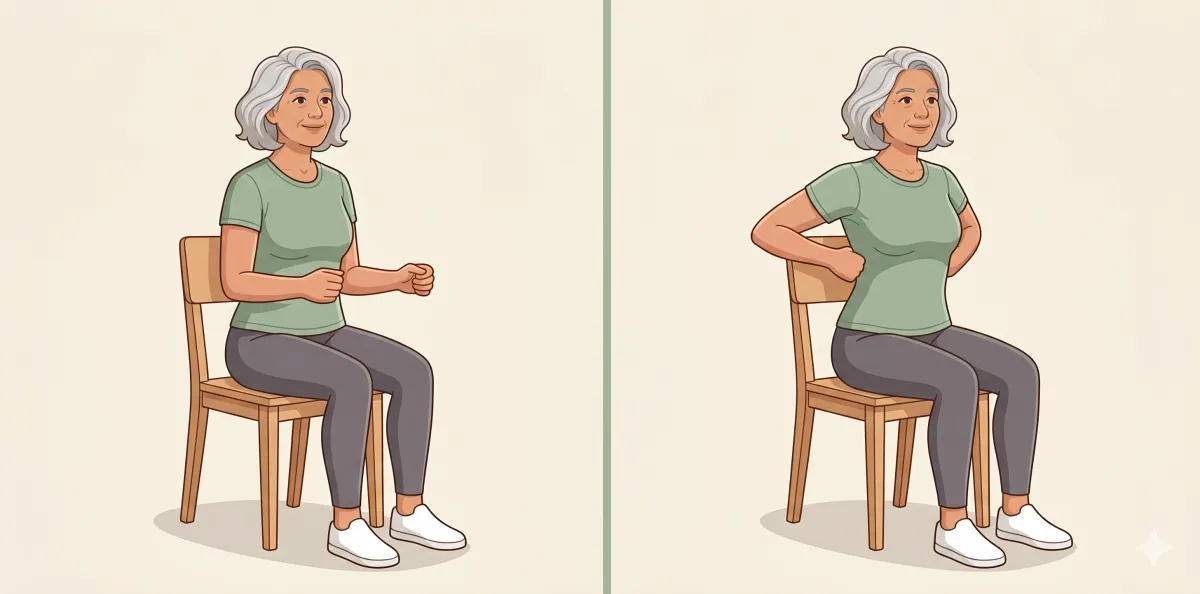
Seated Shoulder-Blade Squeeze: the starting position on the left and the finishing position on the right

Seated Shoulder-Blade Squeeze

  1. Sit tall with both arms relaxed at your sides.
  2. Draw your elbows gently back and squeeze the shoulder blades together.
  3. Hold two seconds, then release.

Aim for: 10–12 reps · 2 sets

Strengthens the upper back and supports good posture.
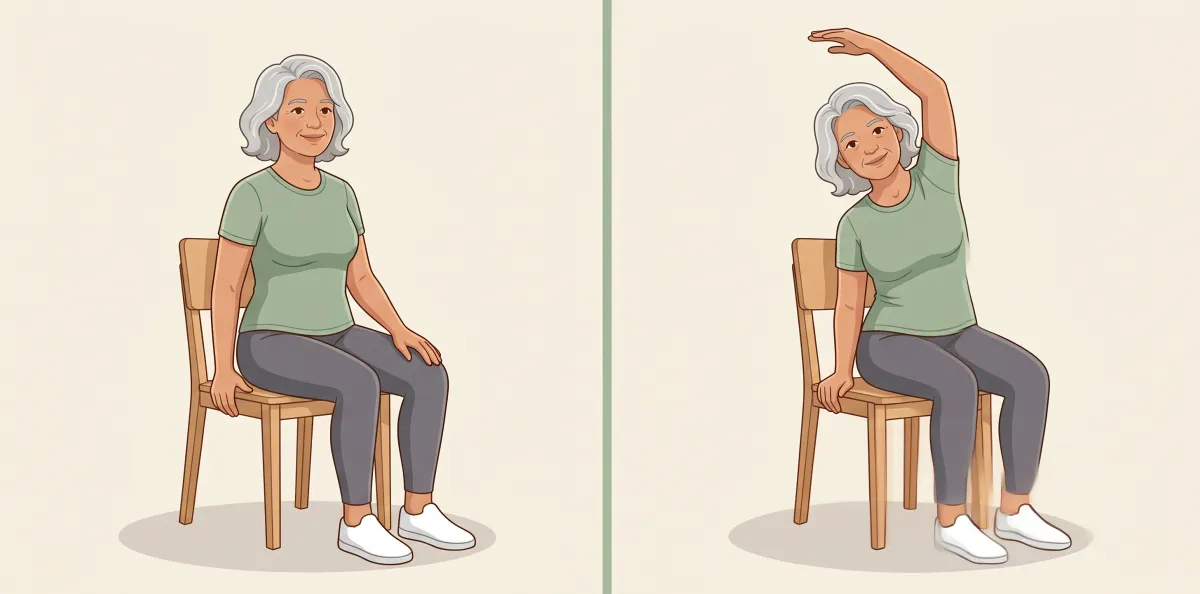
Seated Side Stretch: the starting position on the left and the finishing position on the right

Seated Side Stretch

  1. Sit tall, one hand on the chair seat.
  2. Reach the other arm up and gently over to the side.
  3. Hold, return, and switch sides.

Aim for: Hold 15 seconds each side · 2 times

Stretches the sides and improves easy reaching.

Print this chart

A one-file PDF with all 7 exercises, large step-by-step text, set and rep counts, and a simple figure for each move. Prints clearly in black and white — tape it to the fridge and follow it each day.

Free · No signup · US Letter · 7 exercises

Check with your doctor before starting a new exercise routine, especially if you have a health condition or have not been active for a while. Move slowly and stop any exercise that causes pain.

Tips

  • Move your head very slowly — never jerk or force a neck movement.
  • Breathe steadily throughout and do not hold your breath in a stretch.
  • Stop any movement that causes sharp, shooting, or worsening discomfort.
  • Print on plain white paper for a clear black-and-white chart.

Common questions

How often should I do neck exercises?
Gentle neck movements can be done daily, especially if you sit for long periods or wake up with stiffness. A short session of five to ten minutes in the morning or after a long sit can make a noticeable difference in comfort and range of motion.
Is it normal to hear clicking in the neck during exercises?
A painless click now and then is common and usually harmless. If clicking is accompanied by pain, dizziness, or any new sensation in the arms or hands, stop and speak with your doctor before continuing.
Can neck exercises help with shoulder tension?
Yes. The neck, upper back, and shoulders share many muscles and connective tissues. Shoulder rolls and the shoulder-blade squeeze on this chart directly target that area and are often helpful for people who carry tension in the upper body.