SeniorFit

Chair Yoga for Seniors (Free Printable Chart)

Chair yoga brings gentle stretching and calm breathing to older adults without any floor work. This free printable chart lists six seated poses — a forward fold, cat-cow, side stretch, and gentle twist — each with large step-by-step text and a breathing cue. Move slowly, breathe through your nose, and only stretch to a comfortable point, never into pain.

Position
Seated
Equipment
A sturdy chair without wheels
Exercises
6

The exercises

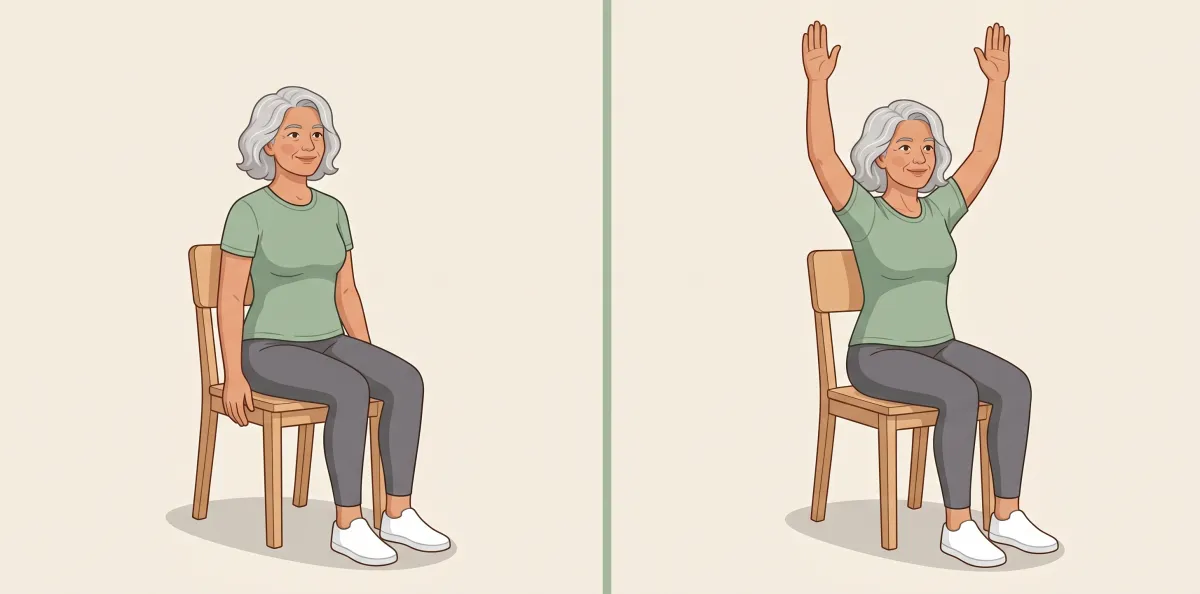
Seated Mountain (Centering Breath): the starting position on the left and the finishing position on the right

Seated Mountain (Centering Breath)

  1. Sit tall, feet flat, hands resting on your thighs.
  2. Breathe in slowly as you lengthen your spine.
  3. Breathe out and relax your shoulders down.

Aim for: 5 slow breaths

Settles the breath and sets a tall, easy posture.
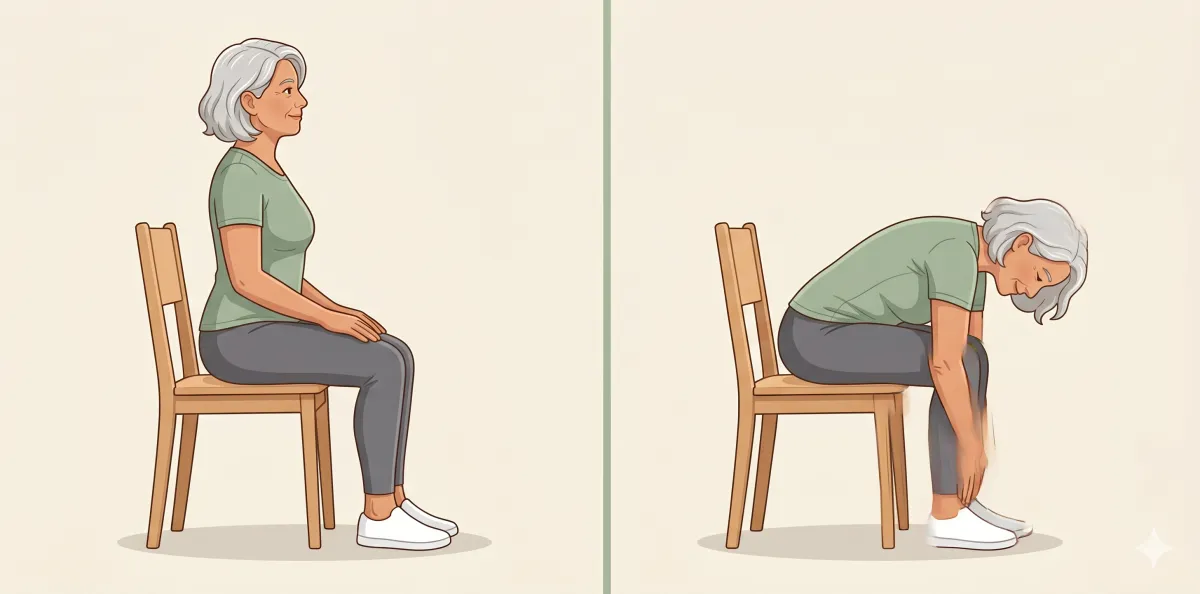
Seated Forward Fold: the starting position on the left and the finishing position on the right

Seated Forward Fold

  1. Sit tall toward the front of the chair, feet flat.
  2. Breathe out and hinge forward from the hips, hands sliding down your legs.
  3. Rest a moment, then roll up slowly to sitting.

Aim for: Hold 3 breaths · 2 times

Gently stretches the back and the backs of the legs.
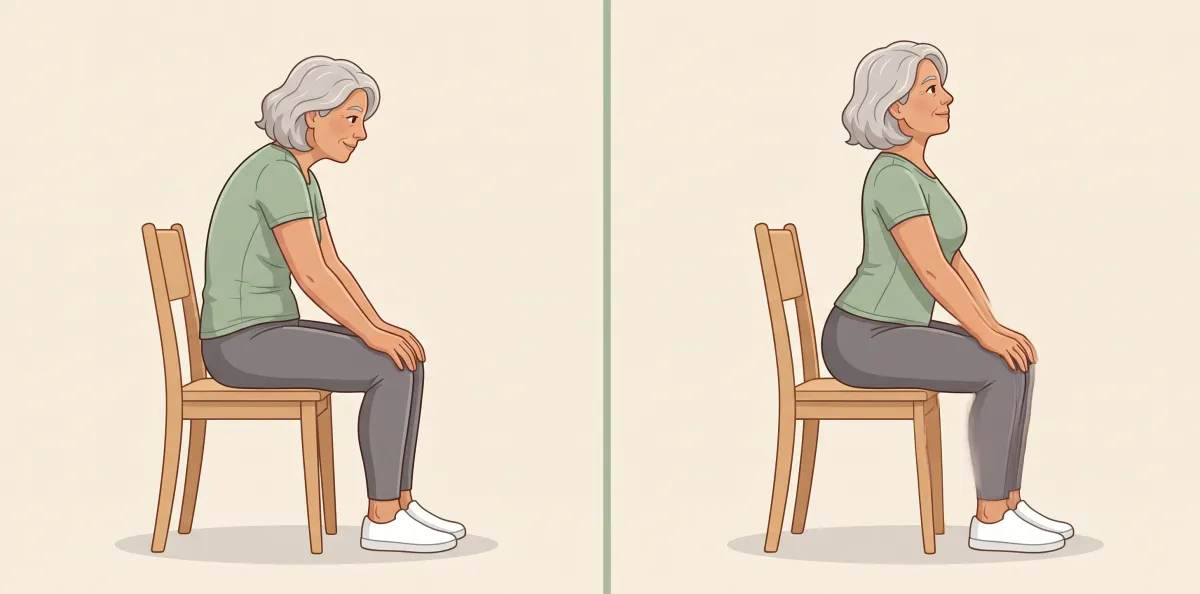
Seated Cat-Cow: the starting position on the left and the finishing position on the right

Seated Cat-Cow

  1. Sit tall with hands on your knees.
  2. Breathe in and arch gently, lifting the chest (cow).
  3. Breathe out and round the back, tucking the chin (cat).

Aim for: 6 slow rounds

Loosens the spine and eases back stiffness.
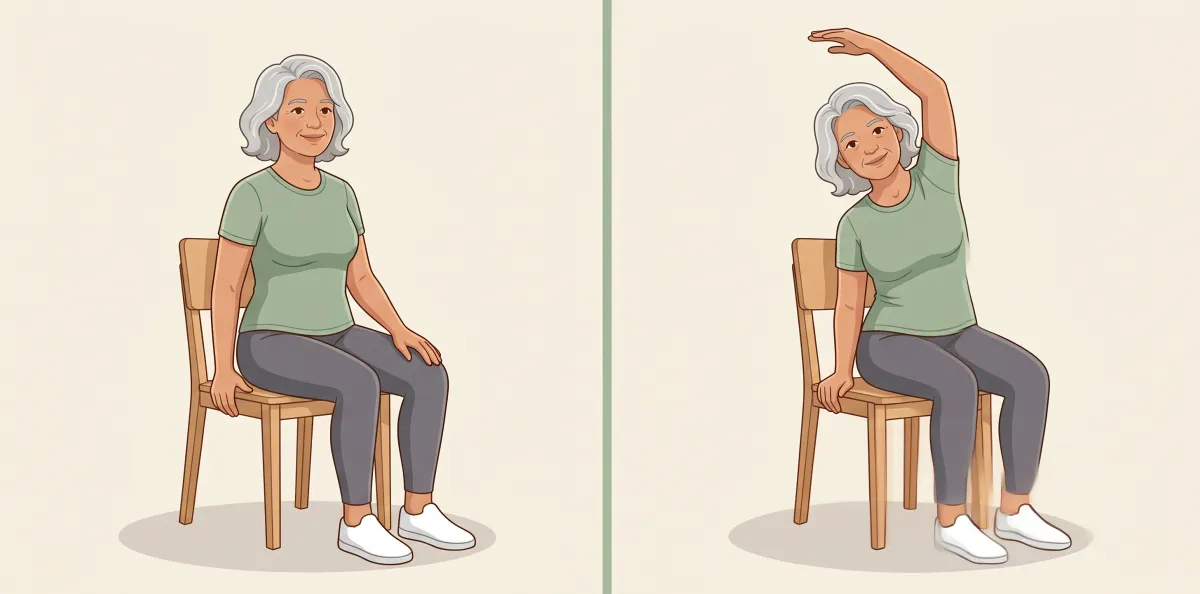
Seated Side Stretch: the starting position on the left and the finishing position on the right

Seated Side Stretch

  1. Sit tall, left hand resting on the chair.
  2. Breathe in and reach your right arm up and over to the left.
  3. Breathe out, return, and switch sides.

Aim for: Hold 3 breaths each side · 2 times

Opens the sides of the body for easier breathing.
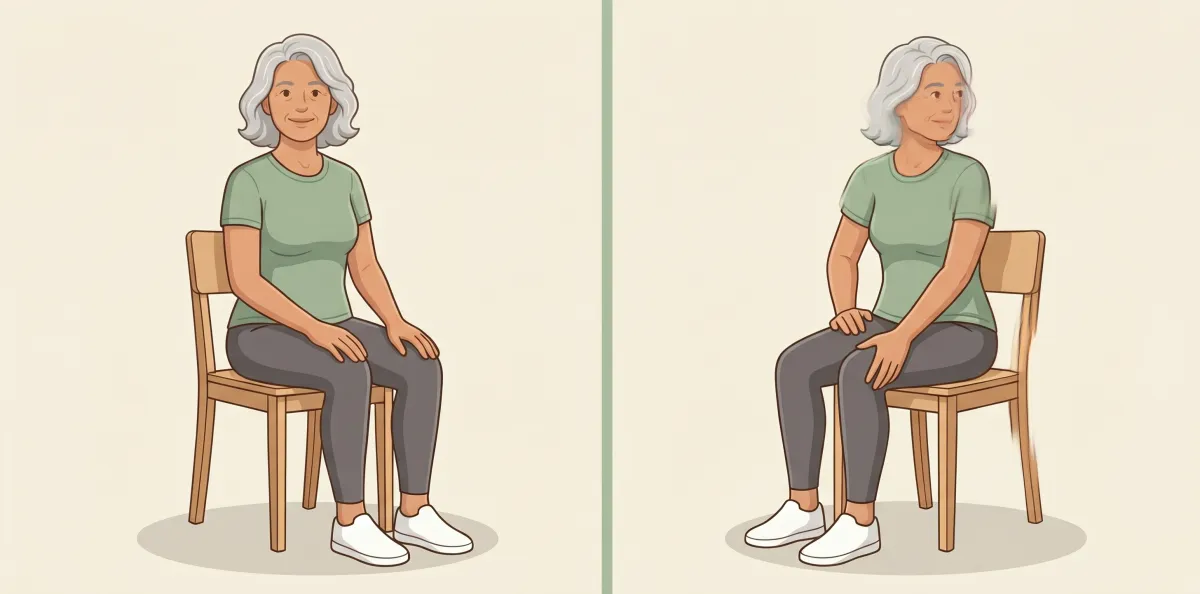
Seated Gentle Twist: the starting position on the left and the finishing position on the right

Seated Gentle Twist

  1. Sit tall with feet flat on the floor.
  2. Breathe out and turn gently to the right, hand on the chair back.
  3. Return to center on an inhale and twist to the left.

Aim for: Hold 3 breaths each side · 1 time

Improves spinal rotation for turning and reaching.
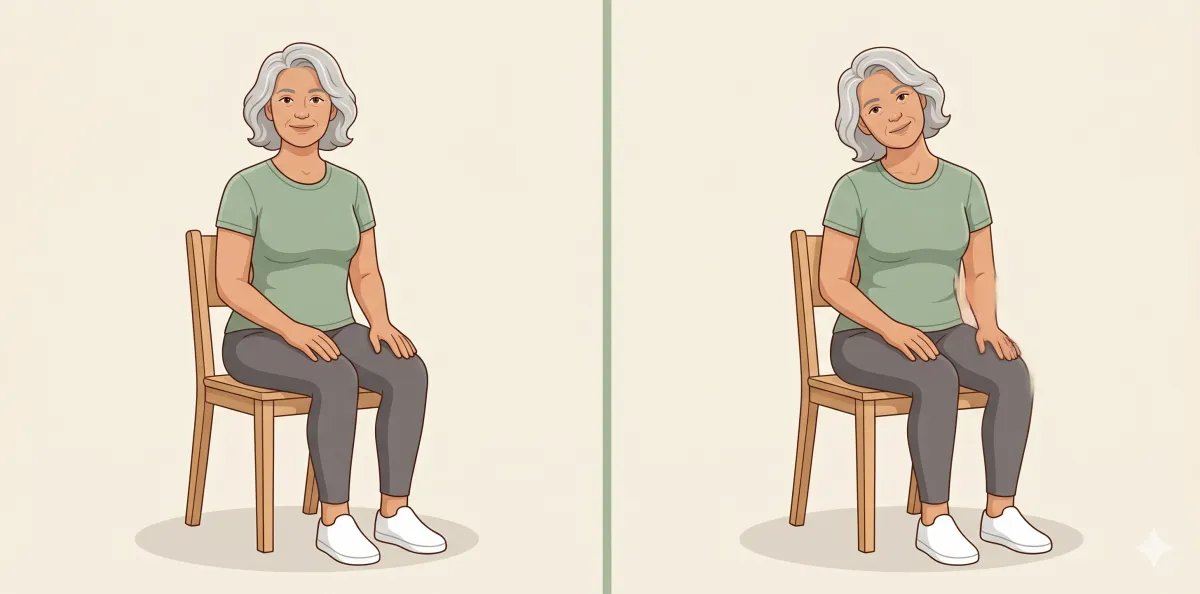
Seated Neck Release: the starting position on the left and the finishing position on the right

Seated Neck Release

  1. Sit tall with shoulders relaxed.
  2. Tilt your right ear gently toward your right shoulder.
  3. Hold, return to center, and tilt to the left.

Aim for: Hold 3 breaths each side · 1 time

Releases tension in the neck and shoulders.

Print this chart

A one-file PDF with all 6 exercises, large step-by-step text, set and rep counts, and a simple figure for each move. Prints clearly in black and white — tape it to the fridge and follow it each day.

Free · No signup · US Letter · 6 exercises

Check with your doctor before starting a new exercise routine, especially if you have a health condition or have not been active for a while. Move slowly and stop any exercise that causes pain.

Tips

  • Breathe slowly through your nose and never hold your breath in a pose.
  • Only stretch to a gentle, comfortable point — never into sharp pain.
  • Use a chair without wheels and sit on a firm, flat seat.
  • Print on plain white paper for a clear black-and-white chart.

Common questions

Is chair yoga suitable for complete beginners?
Yes. Chair yoga was designed for people who find getting up and down from the floor difficult. Every pose is done seated, moves are slow, and you only stretch as far as is comfortable, so it suits beginners and stiff joints.
How is chair yoga different from regular stretching?
Chair yoga pairs each gentle movement with slow, steady breathing, which adds a calming, focused quality. The poses themselves overlap with stretching, but the breath cues help you relax and move more mindfully.
How long should a chair-yoga session last?
Ten to fifteen minutes is plenty to feel looser and calmer. Move through the chart once, resting whenever you need to, and add a second round on days you have more time.