SeniorFit

Parkinson's Exercises for Seniors (Free Printable Chart)

These gentle movements are often included in routines for people living with Parkinson's. This free printable chart lists seven seated and standing exercises — a mountain breath, clock reach, trunk twist, overhead press, side leg raise, heel-to-toe stand, and sit-to-stand — each with large step-by-step text. Move slowly, breathe steadily, and keep a sturdy chair close throughout.

Position
Seated and standing
Equipment
A sturdy chair and light dumbbells
Exercises
7

The exercises

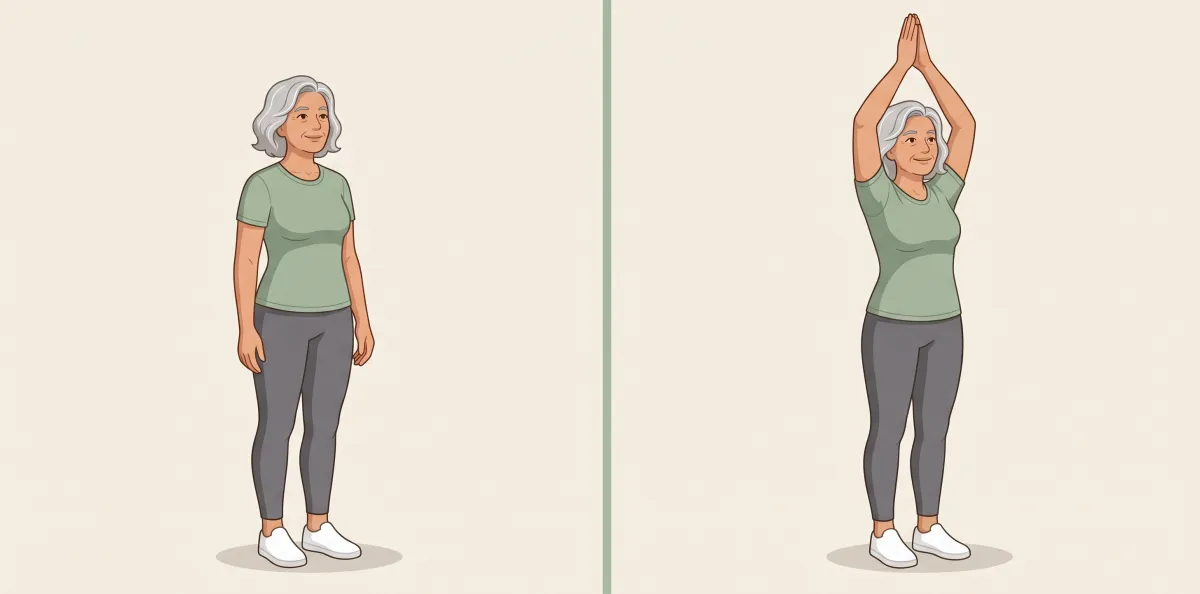
Standing Mountain with Breath: the starting position on the left and the finishing position on the right

Standing Mountain with Breath

  1. Stand tall behind the chair, feet hip-width apart.
  2. Breathe in slowly and sweep both arms overhead.
  3. Breathe out and lower the arms. Repeat with a steady rhythm.

Aim for: 5 slow breaths

Centers the breath and encourages tall, easy posture.
Clock Reach: the starting position on the left and the finishing position on the right

Clock Reach

  1. Stand tall behind a chair, holding it with one hand.
  2. Reach the opposite arm forward to 12 o'clock, then out to 3, then down to 6.
  3. Return to center and switch hands.

Aim for: 2 rounds each side · 1 set

Challenges balance gently while you reach in different directions.

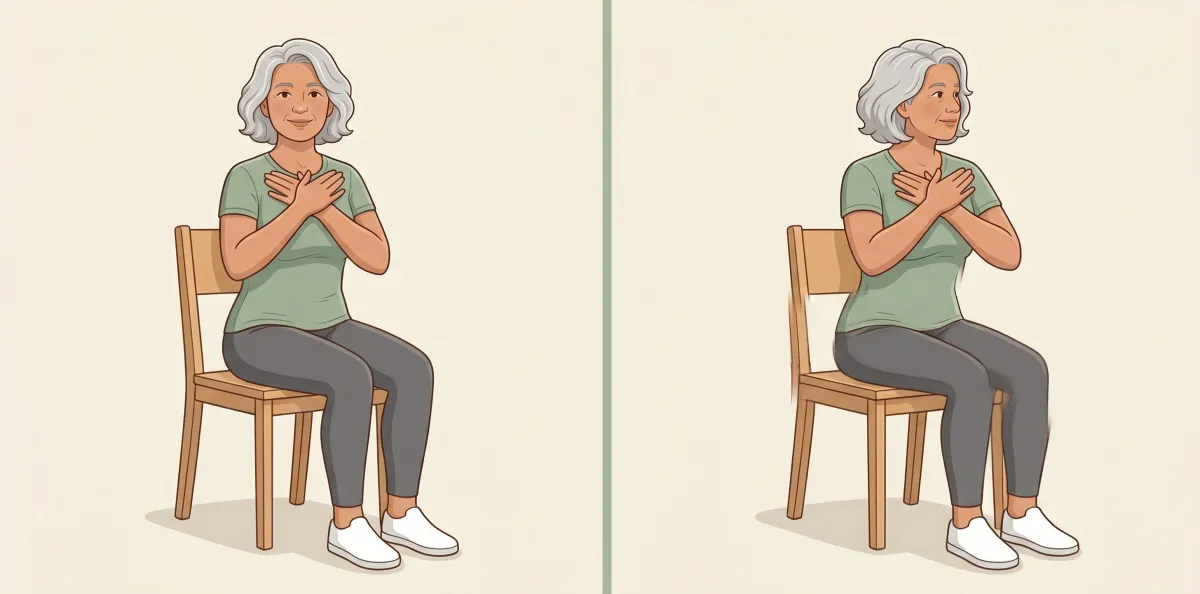
Seated Trunk Twist: the starting position on the left and the finishing position on the right

Seated Trunk Twist

  1. Sit tall, arms crossed loosely over your chest.
  2. Turn your upper body gently to the right and look over your shoulder.
  3. Return to center, then turn gently to the left.

Aim for: 6–8 turns each side · 1 set

Loosens the spine for easier turning and reaching.

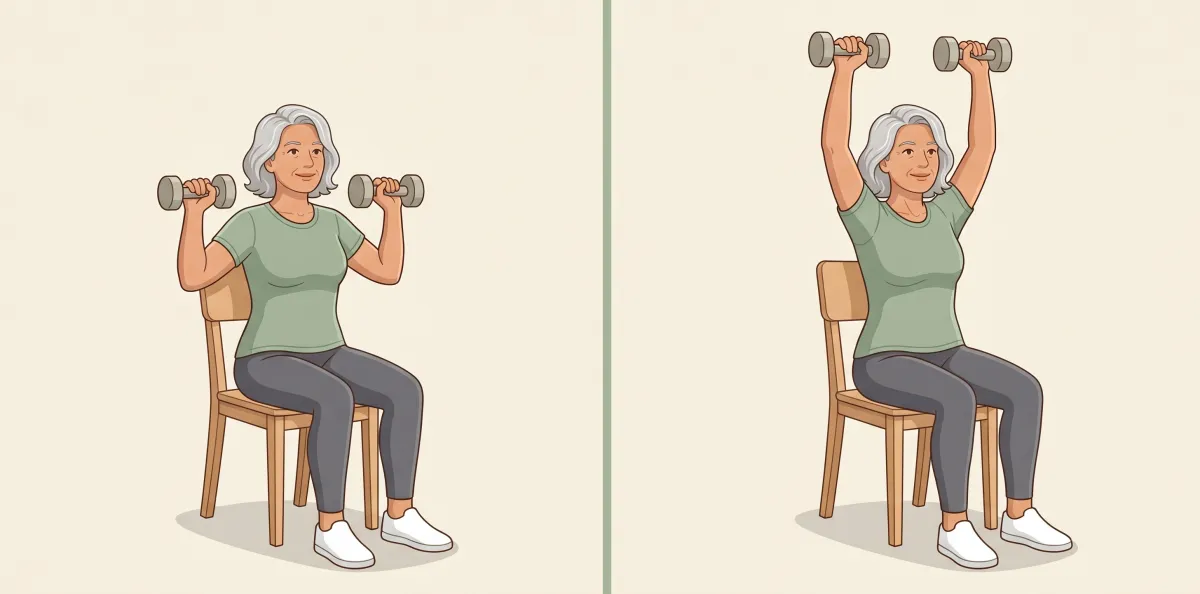
Dumbbell Overhead Press: the starting position on the left and the finishing position on the right

Dumbbell Overhead Press

  1. Sit tall or stand behind the chair, a light dumbbell in each hand at shoulder height.
  2. Press both dumbbells straight overhead until the arms are nearly straight.
  3. Lower them slowly back to shoulder height.

Aim for: 8–10 reps · 2 sets

Builds shoulder and arm strength for lifting overhead.

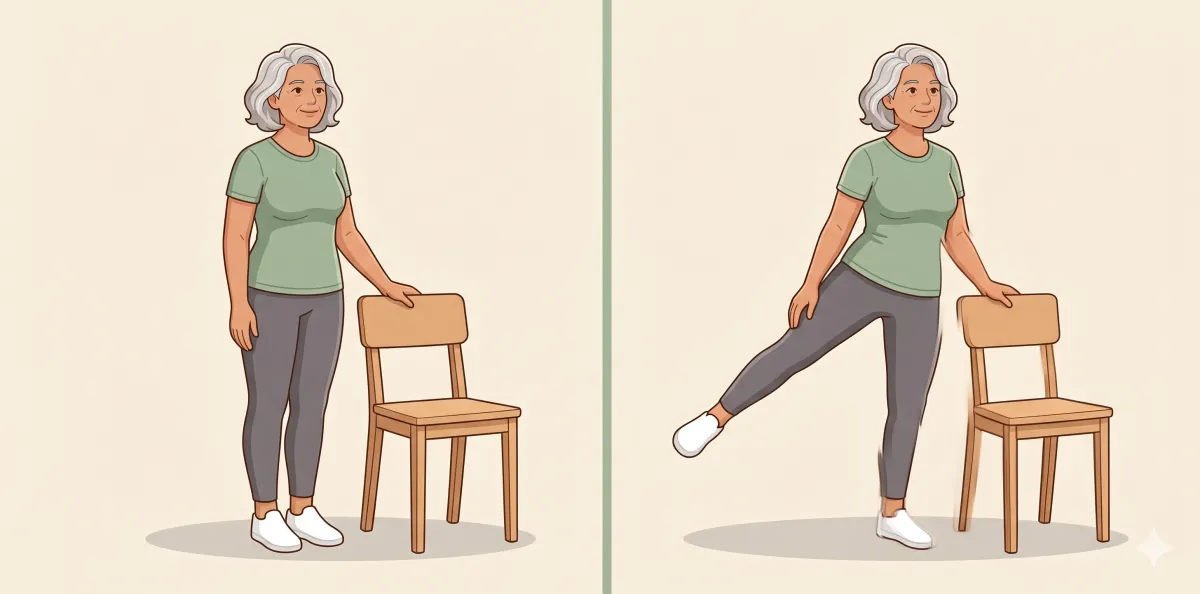
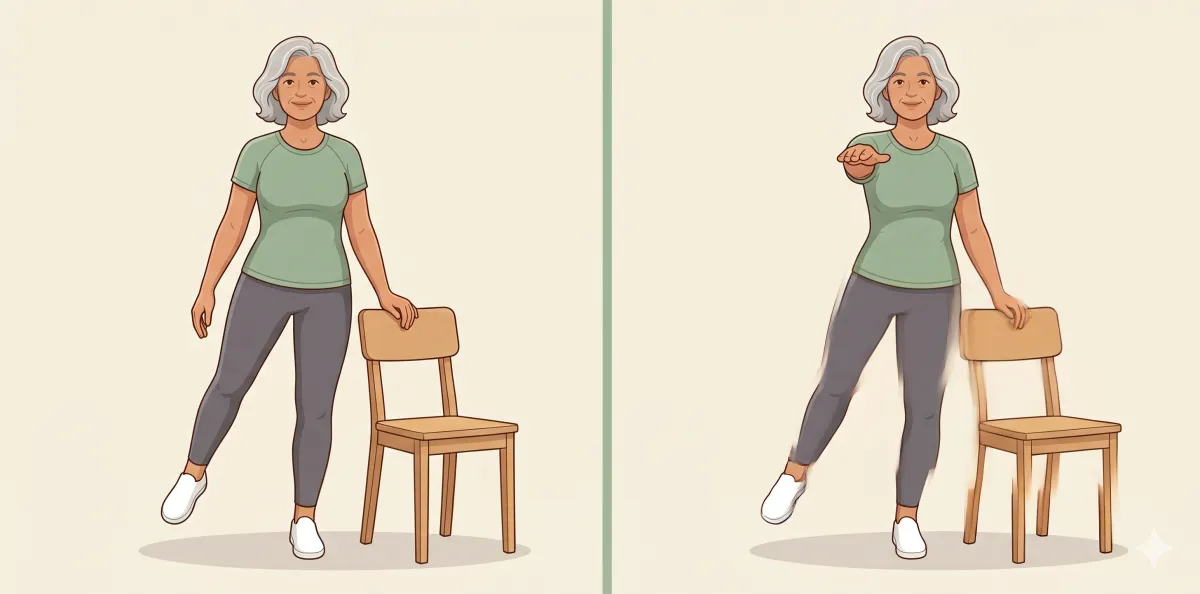
Standing Side Leg Raise: the starting position on the left and the finishing position on the right

Standing Side Leg Raise

  1. Stand tall behind a chair, holding the back.
  2. Lift one leg out to the side, keeping it straight and toes forward.
  3. Lower it slowly. Keep your body upright.

Aim for: 8–10 reps each leg · 2 sets

Works the hips, which help keep you upright and balanced.

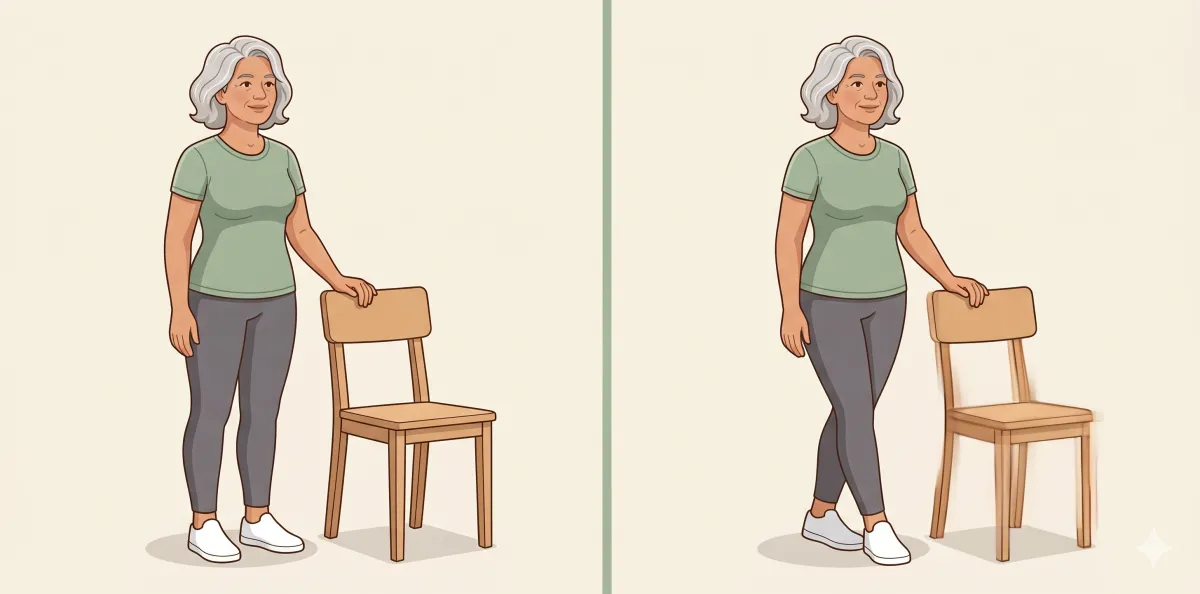
Heel-to-Toe Stand: the starting position on the left and the finishing position on the right

Heel-to-Toe Stand

  1. Hold the chair or counter with one hand.
  2. Place one foot directly in front of the other, heel touching toe.
  3. Hold steady, then switch which foot is in front.

Aim for: Hold 10–20 seconds each side · 2 sets

Trains the narrow-base balance used when walking.

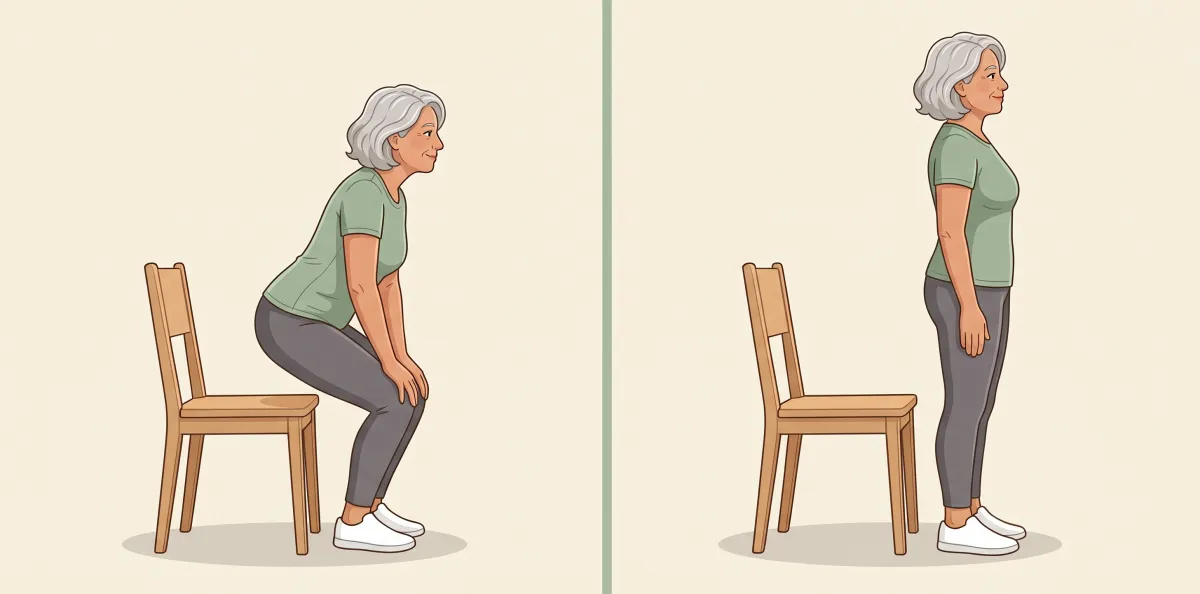
Sit-to-Stand: the starting position on the left and the finishing position on the right

Sit-to-Stand

  1. Sit toward the front of the chair, feet flat and slightly back.
  2. Lean forward and stand up, using hands on the chair only if needed.
  3. Sit back down slowly with control.

Aim for: 5–8 reps · 2 sets

Builds the leg and hip strength used every time you stand.

Print this chart

A one-file PDF with all 7 exercises, large step-by-step text, set and rep counts, and a simple figure for each move. Prints clearly in black and white — tape it to the fridge and follow it each day.

Free · No signup · US Letter · 7 exercises

Check with your doctor before starting a new exercise routine, especially if you have a health condition or have not been active for a while. Move slowly and stop any exercise that causes pain.

Tips

  • Keep a sturdy chair or counter within reach for every standing move.
  • Move slowly and use large, deliberate movements rather than small ones.
  • Work with your doctor or physical therapist to tailor this routine to your needs.
  • Print on plain white paper for a clear black-and-white chart.

Common questions

Are these exercises suitable for someone in the early stages of Parkinson's?
These are gentle, low-load movements that many people do at different stages of living with Parkinson's. Your doctor or physical therapist can confirm which moves are the best fit for your specific situation and help you build a routine safely.
Should I do these exercises alone?
Having a family member or caregiver nearby for the standing exercises is a sensible precaution, especially at first. Once you are comfortable with the routine and know how each move feels, you may be confident doing it independently.
How often should I do this routine?
Many people find that moving through gentle exercises on most days of the week helps them feel more limber and confident. Start with one round and build up as the exercises become familiar. Consistency over time matters more than effort on any single day.