SeniorFit

Balance Exercises for Seniors (Free Printable Chart)

Balance exercises help older adults feel steadier on their feet and move with more confidence. This free printable chart lists seven standing moves — calf raises, side and back leg lifts, heel-to-toe walking, and a clock reach — each with large step-by-step text and a rep count. Always stand behind a sturdy chair or at a counter so you have something to hold.

Position
Standing
Equipment
A sturdy chair or kitchen counter to hold
Exercises
7

The exercises

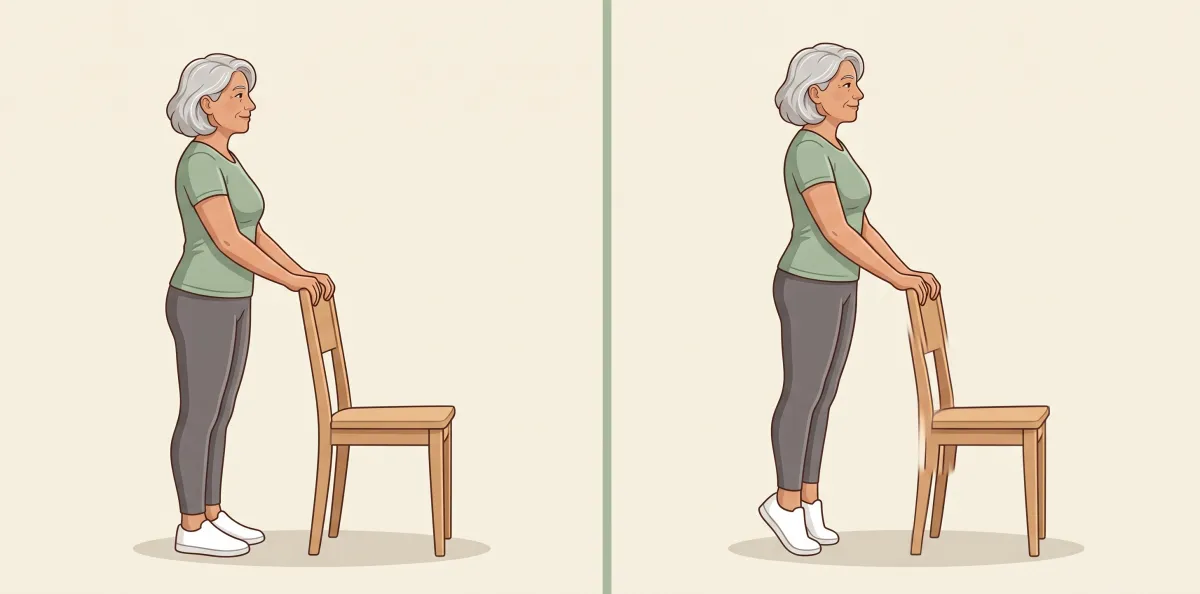
Calf Raises: the starting position on the left and the finishing position on the right

Calf Raises

  1. Stand tall behind a chair, hands resting on the back.
  2. Rise up onto the balls of both feet.
  3. Lower your heels slowly back to the floor.

Aim for: 10–12 reps · 2 sets

Strengthens the calves and ankles for steadier standing.
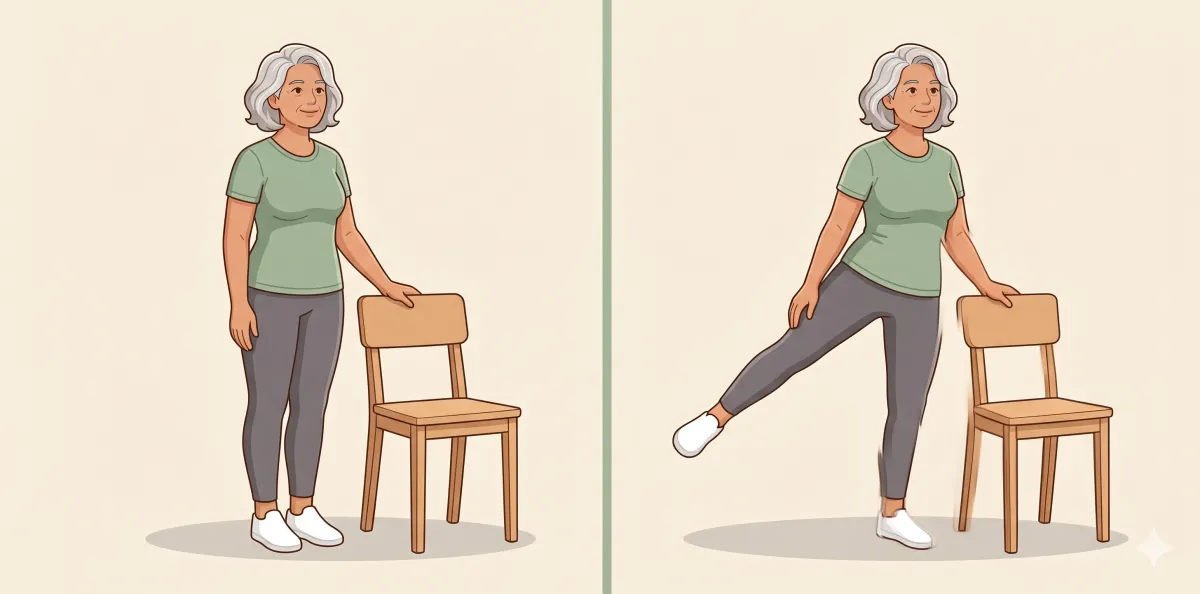
Standing Side Leg Raise: the starting position on the left and the finishing position on the right

Standing Side Leg Raise

  1. Stand tall behind a chair, holding the back.
  2. Lift one leg out to the side, keeping it straight and toes forward.
  3. Lower it slowly. Keep your body upright.

Aim for: 8–10 reps each leg · 2 sets

Works the hips, which help keep you upright and balanced.
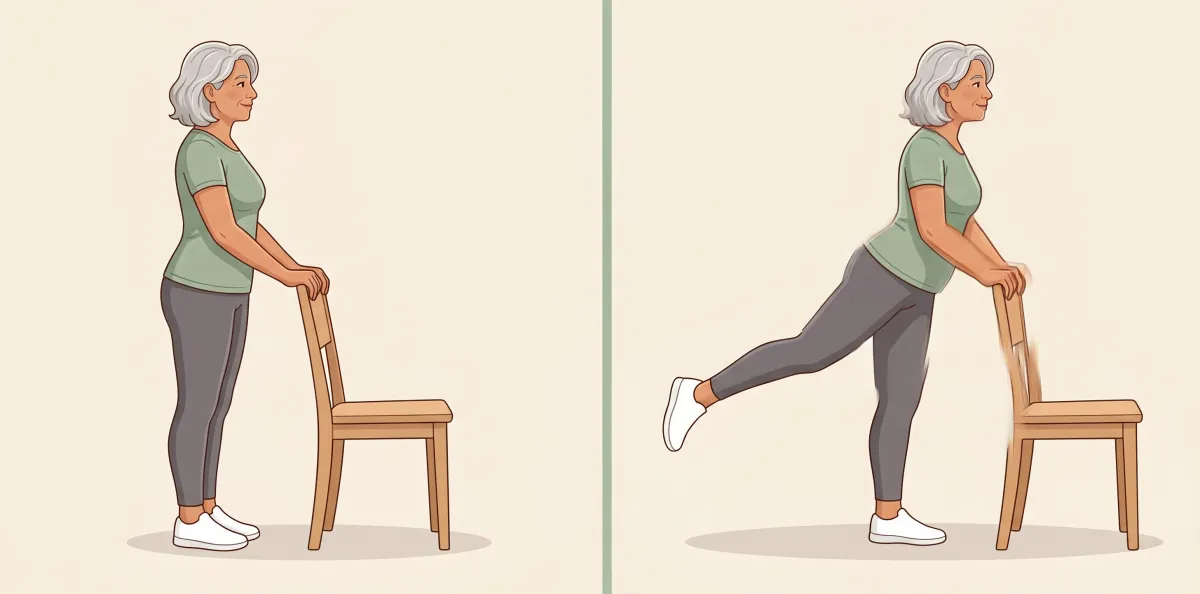
Standing Back Leg Raise: the starting position on the left and the finishing position on the right

Standing Back Leg Raise

  1. Stand tall behind a chair, holding the back.
  2. Lift one leg slowly straight back without leaning forward.
  3. Lower it with control and switch legs.

Aim for: 8–10 reps each leg · 2 sets

Strengthens the buttocks and lower back for stability.
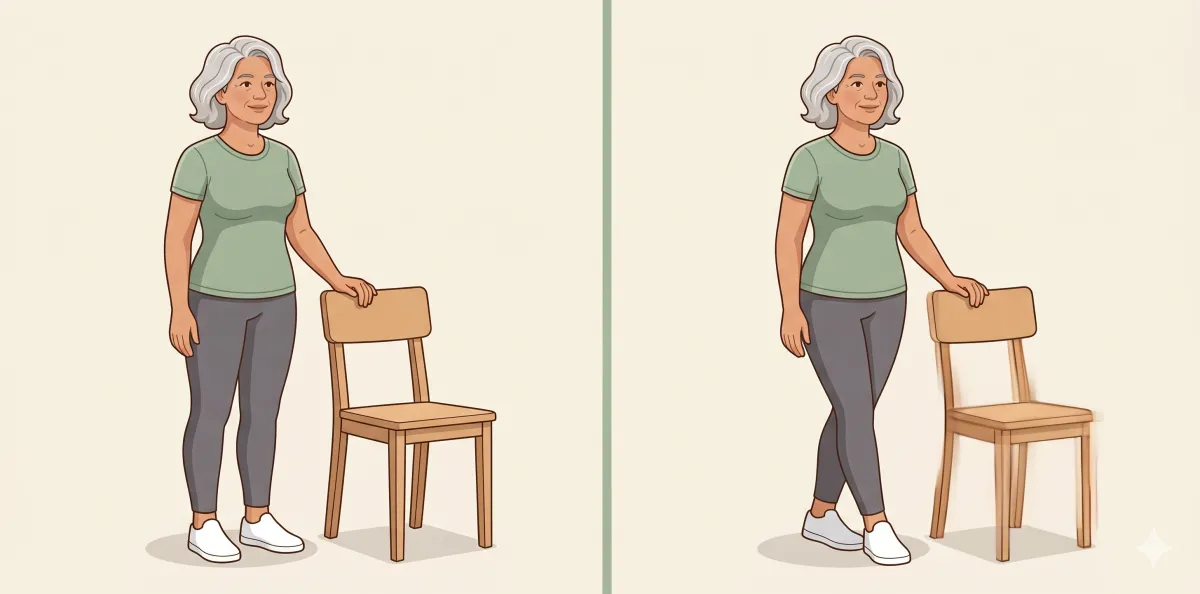
Heel-to-Toe Stand: the starting position on the left and the finishing position on the right

Heel-to-Toe Stand

  1. Hold the chair or counter with one hand.
  2. Place one foot directly in front of the other, heel touching toe.
  3. Hold steady, then switch which foot is in front.

Aim for: Hold 10–20 seconds each side · 2 sets

Trains the narrow-base balance used when walking.

Heel-to-Toe Walk: the starting position on the left and the finishing position on the right

Heel-to-Toe Walk

  1. Stand beside a counter you can reach for support.
  2. Walk forward placing the heel of one foot just ahead of the toes of the other.
  3. Take 10 slow steps, then turn carefully and return.

Aim for: 10 steps and back · 2 sets

Practices the steady, in-line stepping that prevents stumbles.
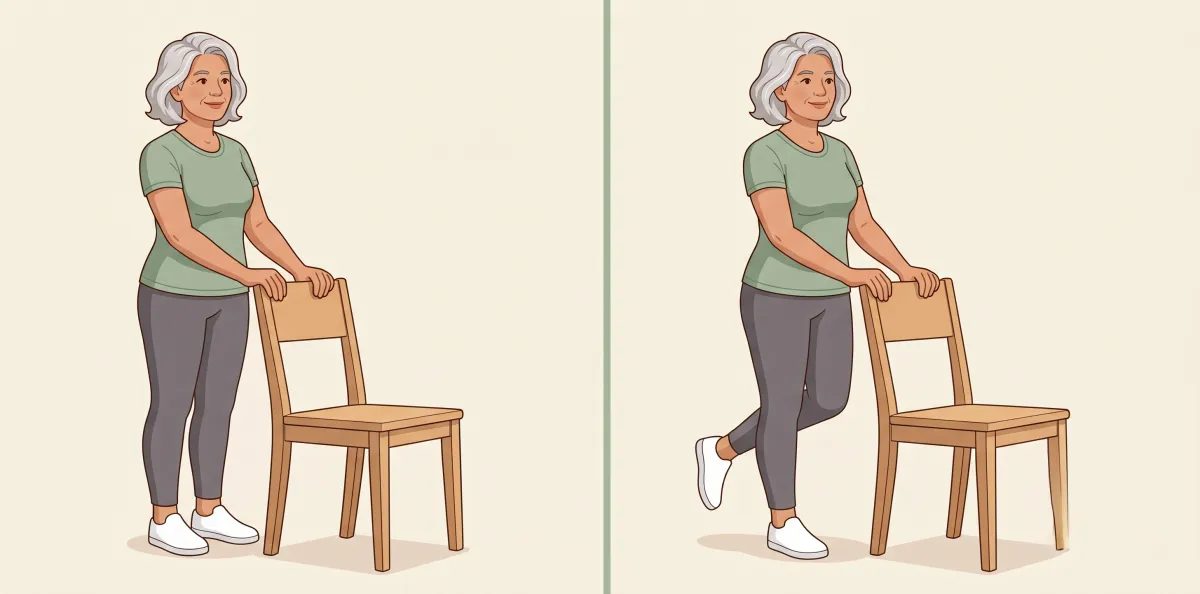
Single-Leg Stand: the starting position on the left and the finishing position on the right

Single-Leg Stand

  1. Stand tall behind a chair, holding the back with both hands.
  2. Lift one foot a few inches off the floor.
  3. Hold, then lower. Switch feet.

Aim for: Hold 10 seconds each leg · 2 sets

Builds the single-leg steadiness used with every step.
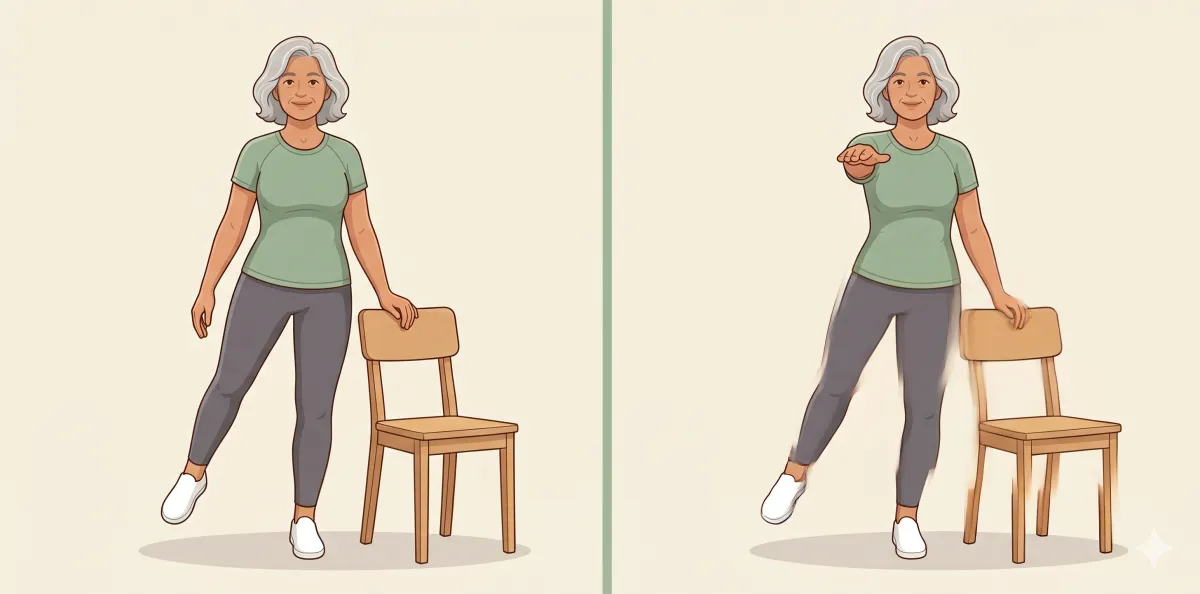
Clock Reach: the starting position on the left and the finishing position on the right

Clock Reach

  1. Stand tall behind a chair, holding it with one hand.
  2. Reach the opposite arm forward to 12 o'clock, then out to 3, then down to 6.
  3. Return to center and switch hands.

Aim for: 2 rounds each side · 1 set

Challenges balance gently while you reach in different directions.

Print this chart

A one-file PDF with all 7 exercises, large step-by-step text, set and rep counts, and a simple figure for each move. Prints clearly in black and white — tape it to the fridge and follow it each day.

Free · No signup · US Letter · 7 exercises

Check with your doctor before starting a new exercise routine, especially if you have a health condition or have not been active for a while. Move slowly and stop any exercise that causes pain.

Tips

  • Always keep a sturdy chair or counter within reach before you begin.
  • Print on plain white paper for a clear black-and-white chart.
  • Move slowly — balance work is about control, not speed.
  • If you feel dizzy, sit down and rest before continuing.

Common questions

How long until balance improves?
Many older adults notice steadier footing within a few weeks of practicing balance moves on most days. Progress comes from doing a little regularly, not from one long session, so keep the chart somewhere you will see it daily.
Should I hold onto something?
Yes, especially at first. Stand behind a sturdy chair or at a kitchen counter so you always have something to grab. As you grow steadier you can hold with one hand, then just your fingertips.
What if I start to lose my balance?
Reach for your chair or counter and plant both feet. Pause, breathe, and only continue when you feel steady. Working near a wall or in a corner gives you extra support to lean on.